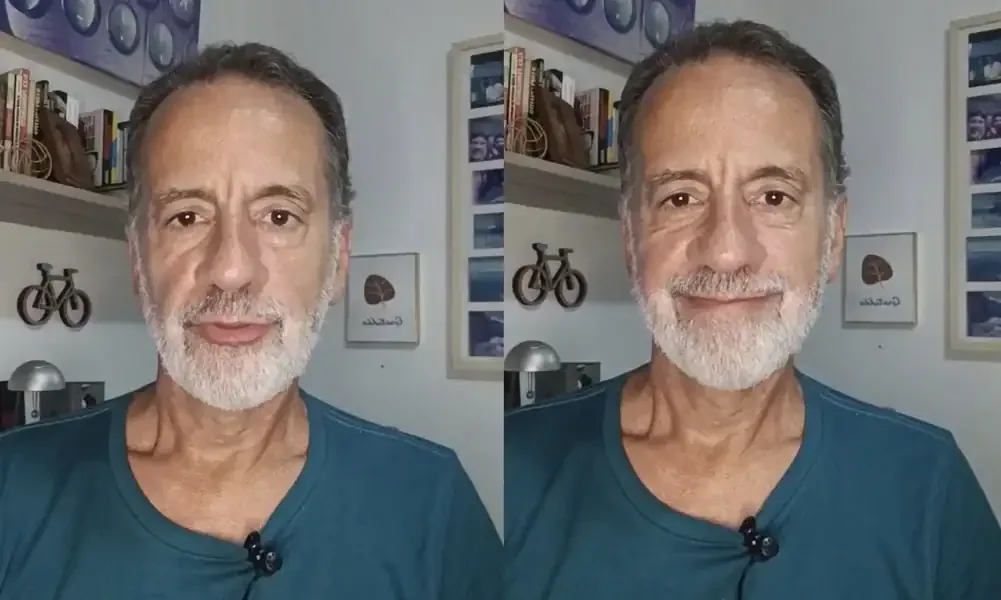
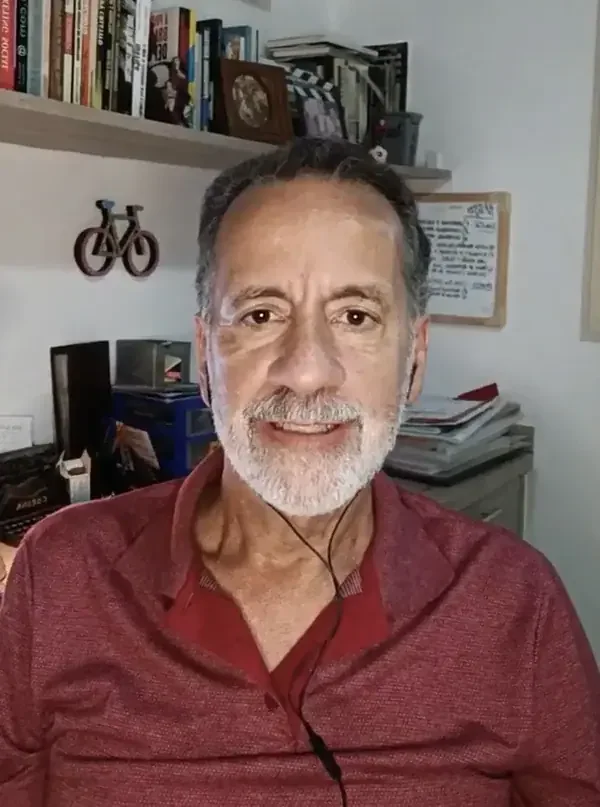
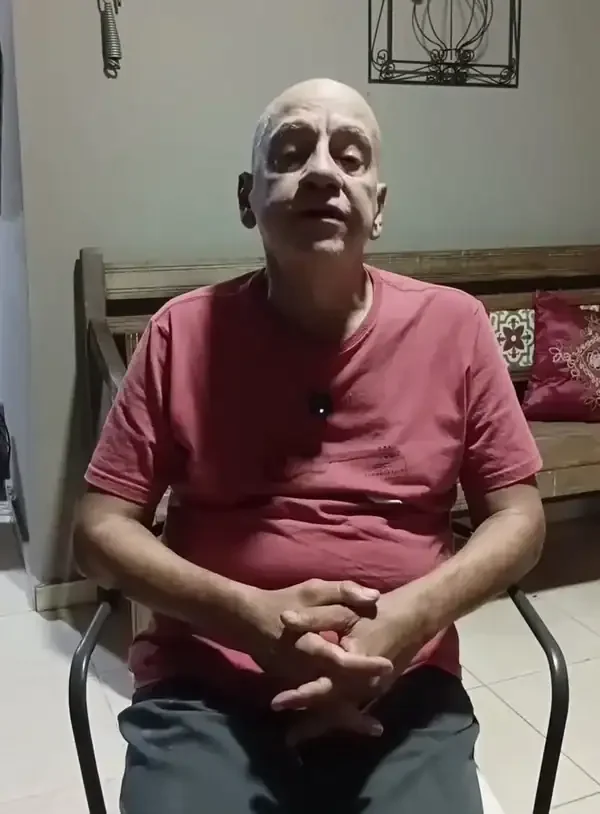
Paulo Peregrino, a 64-year-old Brazilian advertising professional, reached complete remission of non-Hodgkin lymphoma 48 days after receiving CAR-T cell therapy in March 2023. The treatment was developed through research by the University of São Paulo, in partnership with the Blood Center of Ribeirão Preto and the Butantan Institute. Peregrino’s response came after years of treatment, including dozens of chemotherapy sessions and a bone marrow transplant that had not controlled the disease.
Peregrino was diagnosed with non-Hodgkin lymphoma in 2018. His medical history also included another cancer in 2010, followed by about 50 chemotherapy sessions between 2018 and 2021. During that later period, he received a diagnosis of a third lymphoma. The disease continued despite the treatments he had undergone, including a bone marrow transplant.
The opportunity to join the clinical research study came when Peregrino’s condition was considered serious and, according to his account, other treatment options were no longer available. “I had no other option. The option that came up in 2022, when the disease was really completely out of control, was CAR-T cell therapy,” he told G1.
After a medical evaluation, Peregrino was deemed eligible to participate in the research. In March 2023, he received the genetically modified cells. The treatment’s effects were assessed with medical imaging in the weeks that followed.
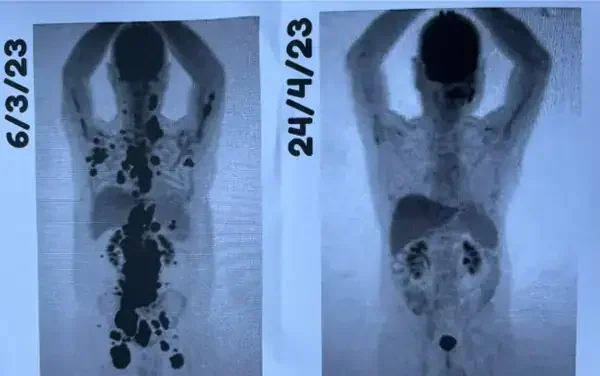
A scan taken on March 6, when he arrived at the Hospital das Clínicas in São Paulo for the final stage of treatment, showed lymphoma throughout his lymphatic system, from his head to his legs. A PET scan performed in April showed that the tumors had disappeared. The reported timeline—from the treatment in March to the follow-up scan in April—was 48 days.
Peregrino described the change between the two scans as dramatic. “A scan was done as soon as I arrived at the HC in São Paulo for the last phase, on March 6. My whole body was taken over by lymphoma, so the entire lymphatic system, from my head to my leg, was affected. One month later, in April, the PET scan showed my whole body was clear. The remission was total, as if someone had erased it,” he said.
CAR-T cell therapy uses a patient’s own immune cells. In the process described in the research account, blood is collected and white blood cells, including lymphocytes, are separated from it. The lymphocytes are then genetically modified in a laboratory so they can recognize and attack cancer cells. After the modified cells have been multiplied, they are returned to the patient’s bloodstream.
The name CAR-T refers to the engineered receptor added to the T cells. In broad terms, the modification is intended to give those immune cells a specific way to identify targets on cancer cells. The patient’s cells are used rather than cells taken from another person, making the treatment individualized. The steps involve collecting cells, modifying and multiplying them, and then administering them back to the patient.
The therapy is used for certain cancers, including B-cell acute lymphoblastic leukemia and B-cell non-Hodgkin lymphoma. It is not described as a general treatment for every cancer. Its use depends on the cancer type and the patient’s medical circumstances, which is why Peregrino was evaluated before joining the study. The account does not provide further details about the study’s eligibility criteria or the specific laboratory process used for his treatment.
New results from the research cited in the report indicate that approximately nine out of 10 patients had a significant reduction in tumors or no detectable tumors after receiving the therapy. That figure describes the results reported for the study and should not be read as a guarantee for an individual patient. Outcomes can vary, and the report does not provide a full breakdown of the number of participants, the length of follow-up, or the different responses observed.
In cancer care, remission means that signs of the disease have decreased or cannot be detected by the tests used to assess it. A report of complete remission describes the absence of detectable disease at the time of evaluation; it does not, by itself, establish that cancer can never return. Peregrino’s April PET scan showed no tumors, according to the account, and the result was described as total remission. The report does not give additional information about later scans or his long-term follow-up.
CAR-T therapy is a form of cellular immunotherapy: instead of relying only on medicines that act directly on cancer cells, it involves preparing immune cells to identify a target and respond to it. The process is different from conventional chemotherapy, which Peregrino had received repeatedly. It also differs from a bone marrow transplant, which was part of his earlier treatment history. In his case, the modified cells were administered in a process that he said took about 45 minutes.
Recalling the treatment, Peregrino said the speed of the infusion stood out to him after more than a decade living with cancer. He described a nurse bringing a thermal container into his hospital room and taking out a bag of blood cells. When he asked whether it was CAR-T therapy and how long the procedure would take, he was told it would take about 45 minutes.
“For me, [2023] was the peak of a 13-year fight against cancer. I always say that when the nurse came into the room carrying a thermal box and took out a bag of blood, I looked at it and said, ‘Is that CAR-T cell therapy?’ She said, ‘Yes.’ And then I said, ‘How long will it take?’ She said, ‘About 45 minutes.’ I get a little emotional, because in one hour, theoretically, you can solve a 13-year problem. That is the secret of science,” he said.
The time required to administer the prepared cells is only one part of the broader process. The treatment also involves evaluating the patient, collecting immune cells, modifying and multiplying them, and assessing the response afterward. The report focuses on Peregrino’s experience and the scan results; it does not describe each stage’s duration or provide details about his care after the infusion.
Peregrino said he agreed to participate in the clinical study in part because research could benefit other patients in the future. Clinical studies help researchers evaluate treatments and gather information about how patients respond. His participation gave the research team the opportunity to document his experience, while his story has also been shared publicly as an account of one patient’s outcome.
“I understand that taking part in a clinical study is essential so that people in the future can use the benefits of that experience. I did it with complete willingness, and I am even proud to be part of it. When I share my story, I know I am giving people a little hope. Believe in science and, I always say, God and science brought me here,” he said.
Peregrino’s remission followed a difficult course involving multiple cancer diagnoses, chemotherapy, a transplant, and a period in which the lymphoma was described as uncontrolled. His case illustrates the treatment response reported for one participant in a research program developed by Brazilian institutions. The study’s broader results, as cited in the report, point to substantial tumor reduction or disappearance in about nine out of 10 patients, while Peregrino’s own scans showed no detectable tumors 48 days after he received the modified cells.