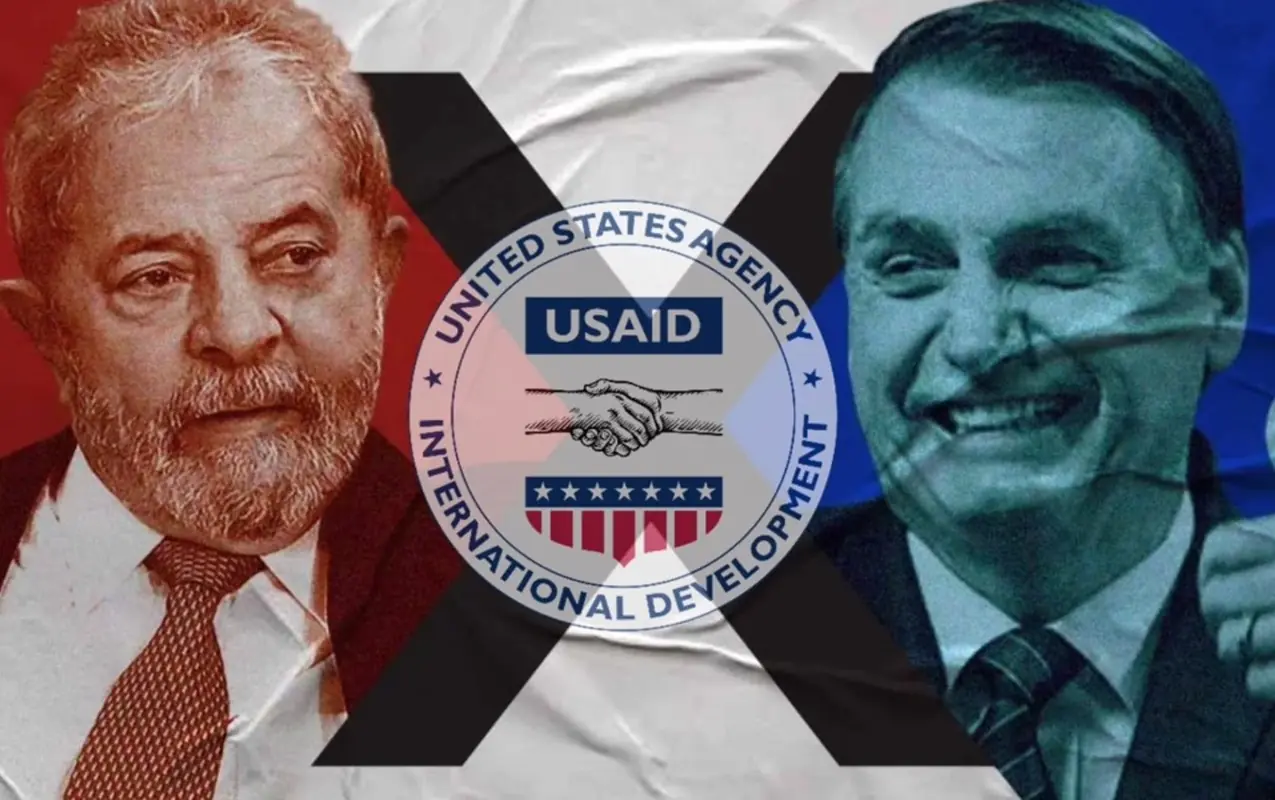
A USAID report said Jair Bolsonaro agreed to a transfer of power after Luiz Inácio Lula da Silva won Brazil’s 2022 presidential election. (Foto: Instagram)
A report prepared for the U.S. Agency for International Development (USAID) says then-President Jair Bolsonaro agreed to a transfer of power after Luiz Inácio Lula da Silva won Brazil’s 2022 presidential election. The report, dated Nov. 22, 2022, was published on the agency’s website on Nov. 24. It said Bolsonaro’s agreement allowed government agencies to begin preparing for Lula’s administration.
The report was among 248 files posted on the agency’s website, which was presented as “USAID Files.” It assessed prospects for democratic openings in several countries and described Lula’s election as a possible turning point and a strong basis for democratic progress. The website, under the Trump administration, said previous administrations had used USAID to advance an agenda it characterized as radical and contrary to American values. USAID stopped operating independently in 2025, and its functions were absorbed by the State Department.
A section on Brazil written before the election said polling suggested Bolsonaro would not be reelected and Lula would win either in the first round or in a runoff. It also said Brazil’s liberal democracy index had declined during the presidencies of Michel Temer and Bolsonaro, and projected that a Lula presidency could bring the country back to a higher level. The report said Bolsonaro might refuse to accept defeat and that conservative military leaders might favor him, but assessed that the military was unlikely to participate in a coup attempt.
The report was submitted on Nov. 22 and approved by the agency on Jan. 3. Five days later, on Jan. 8, 2023, Bolsonaro supporters invaded and damaged the headquarters of Brazil’s three branches of government in Brasília. On Sept. 11, 2025, the Supreme Federal Court’s First Panel sentenced Bolsonaro to 27 years and three months in prison for attempting a coup and related crimes. Retired generals who had served in his government were also convicted in the same case.
The documents also describe communications between Alphabet, Google and YouTube’s parent company, and the U.S. government about election security. On Dec. 7, 2022, during Joe Biden’s presidency, Alphabet briefed the State Department on election protection. Vera Zakem, then a senior USAID adviser, attended. An internal account she sent on Dec. 13 summarized Google’s reference to a Threat Analysis Group bulletin, which said the company had removed 76 YouTube channels as part of an investigation into coordinated influence operations linked to Brazil. The campaign, Google said, shared Brazilian Portuguese-language content favorable to Bolsonaro.
The 76 channels were removed in October 2022, before the runoff held on Oct. 30. Google had already made the removals public in its “TAG Bulletin: Q4 2022”; the newer files show that the information was also formally shared with U.S. officials in a meeting attended by a USAID representative. Notes from a separate U.S. government meeting with YouTube on April 20, 2023, say the company described its approach in Brazil as proactive and thorough but said it had still failed to anticipate the level of violence. The document does not specifically identify Jan. 8.