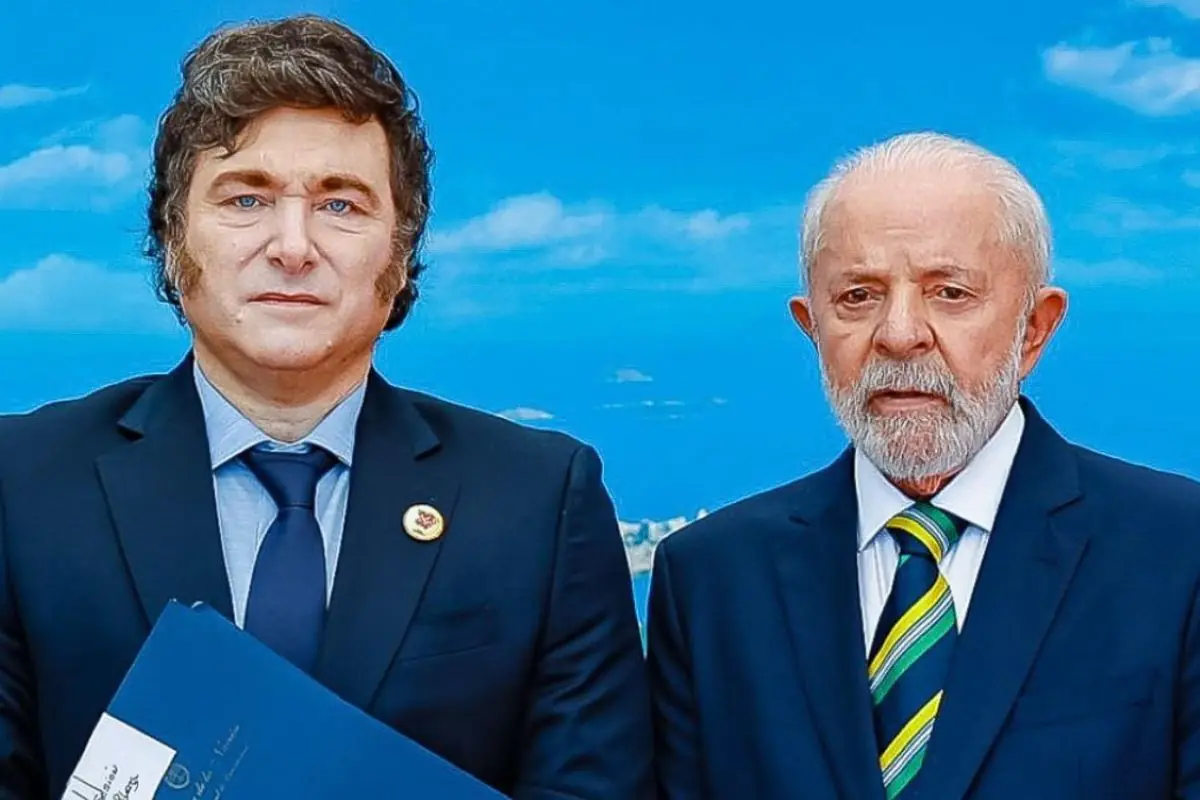
Tensions between Brazil and Argentina are rising after Brazil decided not to invite Argentine President Javier Milei to President Luiz Inácio Lula da Silva’s Jan. 5 inauguration. (Foto: Instagram)
A decision by Brazil’s government not to invite Argentine President Javier Milei to Luiz Inácio Lula da Silva’s inauguration on Jan. 5 is intensifying tensions between the two countries. It would be the first time since Brazil’s return to democracy that an Argentine leader has not been invited to a Brazilian presidential inauguration. The dispute has not amounted to a diplomatic rupture, but the move reflects significant Brazilian dissatisfaction with Milei’s government and threatens to strain a historically close relationship.
Invitations have not yet been sent, but the political assessment in Brazil is that there is no suitable basis for inviting Milei to the event, according to published information. Argentina’s Foreign Minister, Pablo Quirno, is also not expected to be invited. The decision followed renewed questions from Quirno about the election process that returned Lula to office for a fourth term. Brazil’s Foreign Ministry and the presidential palace are concerned about the dispute, while also seeking to preserve ties with Argentina, which has deep economic, cultural and political connections with Brazil.
The tensions escalated after Milei directed personal insults at Lula. In July, at an event in São Paulo that formalized Flávio Bolsonaro’s candidacy as Lula’s opponent in the presidential race, Milei called Lula a “thief” and Supreme Court Justice Alexandre de Moraes “bald trash.” Brazil’s Foreign Ministry summoned Argentina’s ambassador in Brasília and recalled Brazil’s representative in Buenos Aires. The following month, both countries removed their ambassadors from their posts, lowering the level of diplomatic representation. Since then, the embassies have been led by chargé d’affaires.
Five days before Brazil’s presidential runoff, Milei again questioned the integrity of the election and suggested fraud might have occurred. Brazil’s Foreign Ministry called his remarks “a new and unacceptable attempt at foreign interference in Brazil’s democratic process” and said that only Brazilian voters could decide the country’s political future. About a month after the election, Quirno again raised doubts about the result. Argentina’s government has not officially recognized Lula’s reelection, adding to the strains between the two governments.
Political tensions had already grown after Milei’s 2023 election. During his campaign, he openly opposed Lula and described him as a “furious communist.” After Milei won, Lula said he expected an apology, but Milei declined to apologize. Despite their ideological differences, Brazil’s government sought to maintain normal political, diplomatic and commercial ties. People close to Lula say the two countries have significant shared interests, including strategic economic ties, and that Brazil is one of Argentina’s principal trading partners. They also argue that Milei’s government has struggled to keep political disagreements separate from relations between the states.
Other episodes have contributed to the deterioration. Flávio Bolsonaro’s departure for the United States after losing the presidential election added another source of tension, while members of Argentina’s government have questioned Brazil’s election process. Brazilian officials say it is still possible to maintain stable relations despite the distance between the presidents. People close to Lula say a return to normal ties would be possible if Argentina signals it wants to restore good relations. Without a change in Milei’s approach, the focus is expected to be on protecting commercial ties and preventing damage to the countries’ economic relationship.