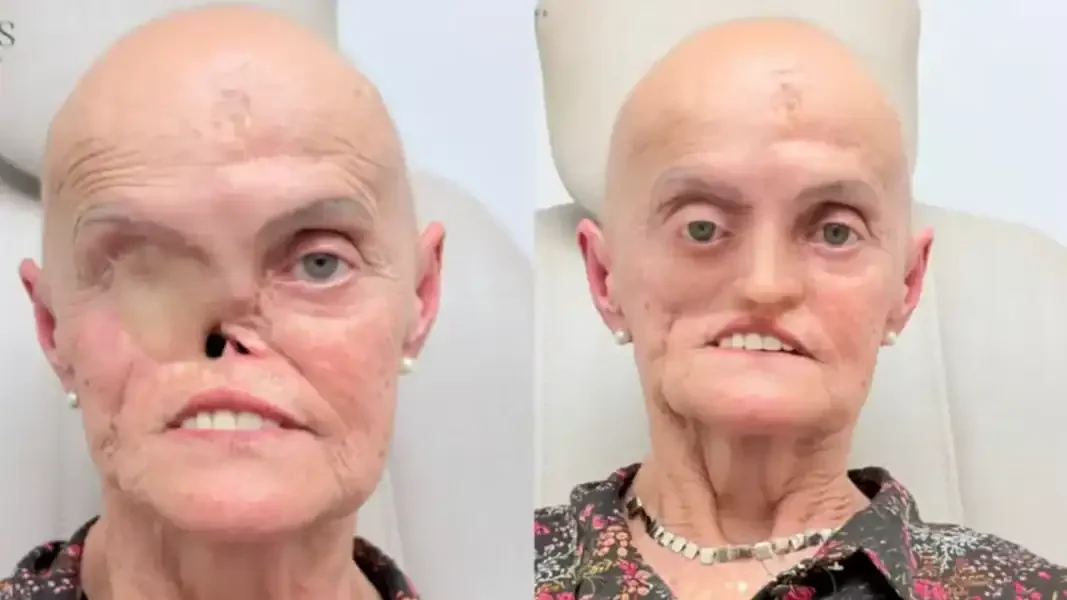
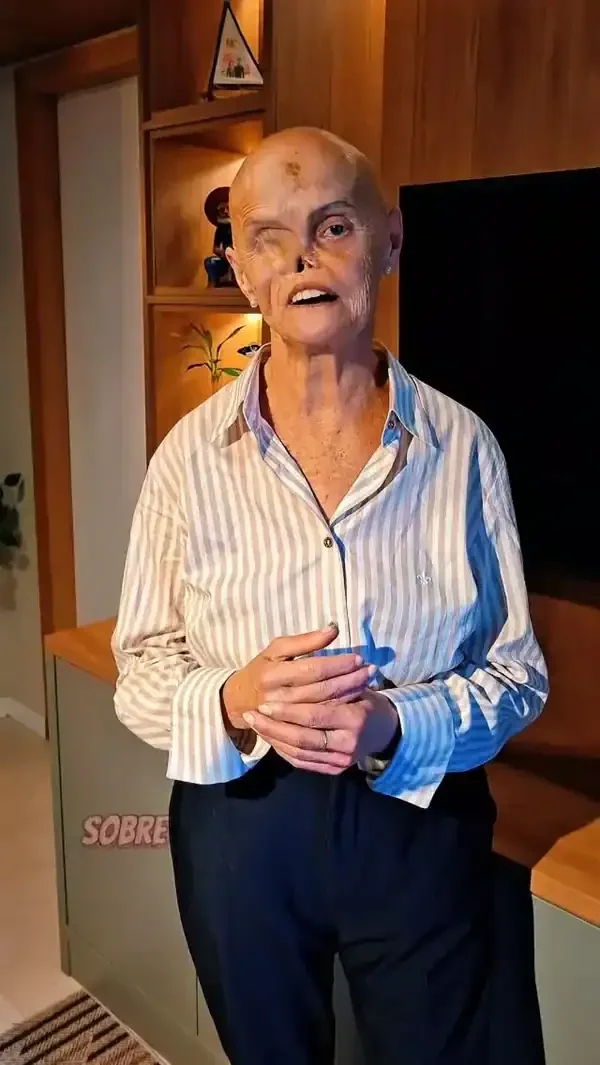
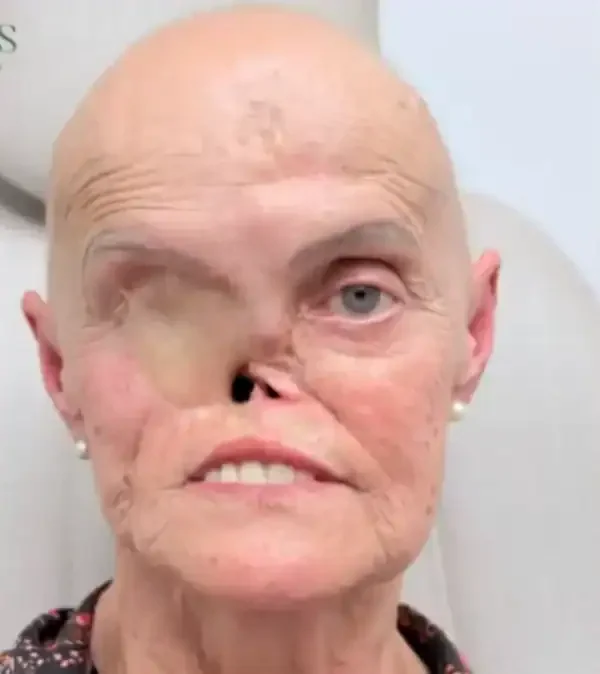
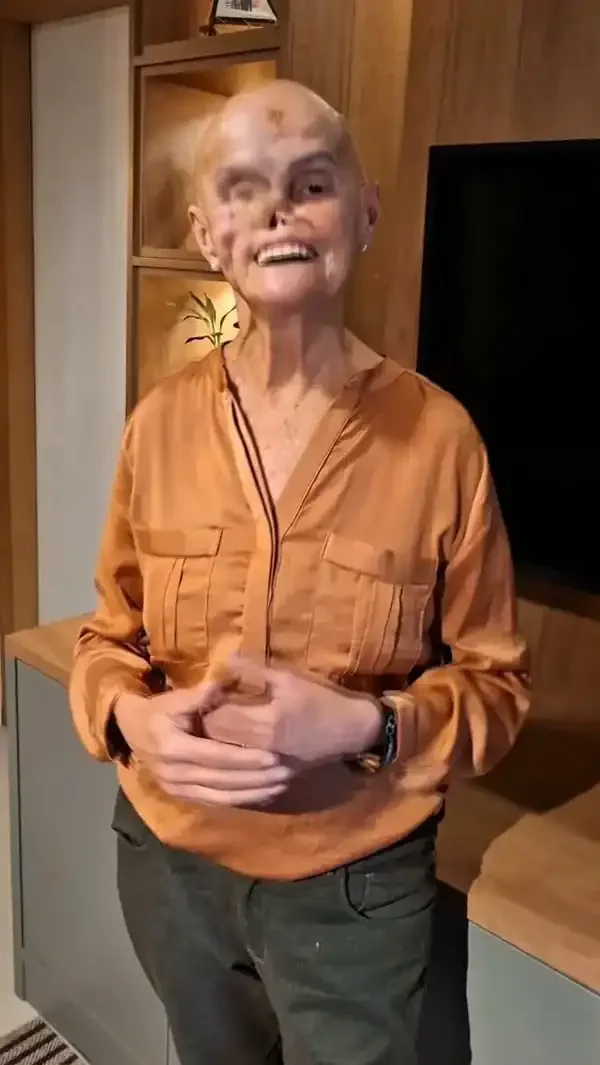
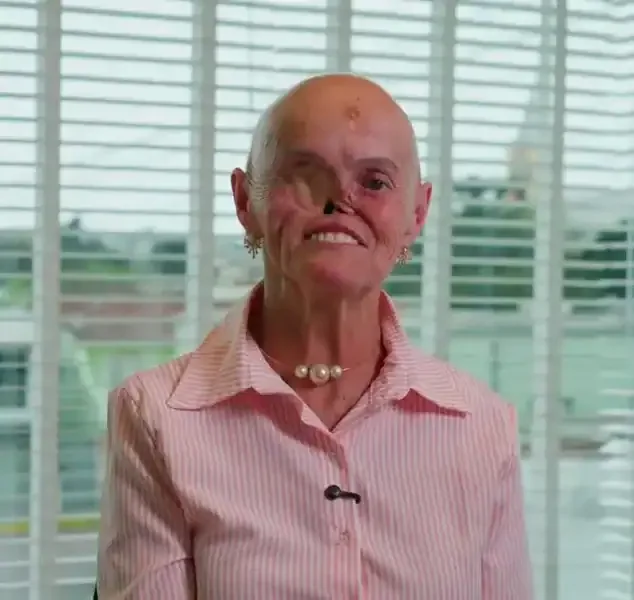
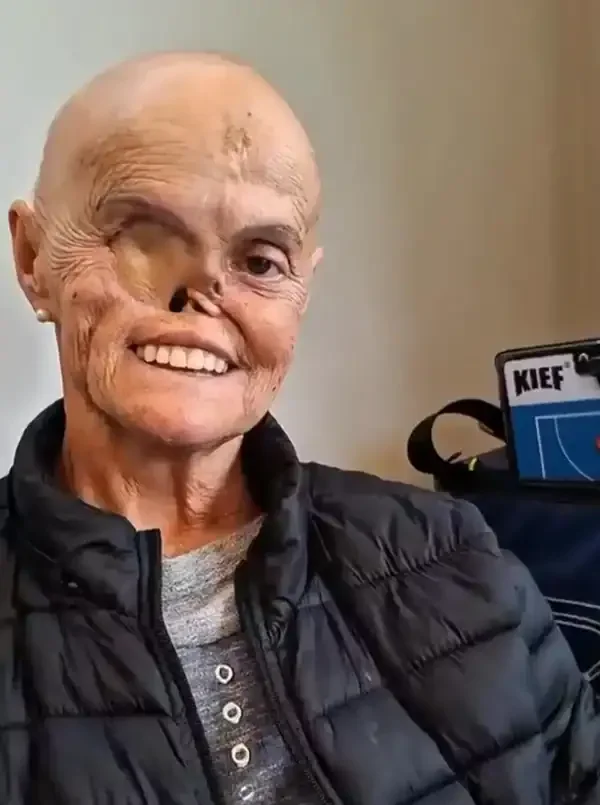
Hilaria Mireski, a 62-year-old former street sweeper who lives in Itaiópolis, in northern Santa Catarina, Brazil, received prostheses for her nose and one eye on Wednesday the 18th, according to G1. She lost parts of her face after developing numerous skin tumors over the course of her life. Diagnosed with Gorlin-Goltz syndrome, a rare genetic condition that increases the likelihood of tumors, she has now begun a stage of facial rehabilitation with custom-made silicone pieces.
The initiative came from Teresa Vong, founder of AT Próteses, a clinic in Jacareí, in the interior of São Paulo state. Vong learned about Mireski’s experience through social media and offered to help. The clinic arranged to make the two prostheses for her. Production and fitting of both pieces took place on the same day.
Vong shared the result on social media and described her experience accompanying Mireski as the prostheses were put in place. “Seeing Hilaria with her prostheses was very emotional. For us, it was not just the completion of professional work, but an opportunity to contribute to a transformation in someone’s life,” the specialist said.
The prostheses are made of silicone and attached to the skin with a special adhesive. According to Vong, they are expected to last between five and seven years. The facial rehabilitation is intended to restore facial harmony and contribute to Mireski’s self-esteem and quality of life. The pieces replace features affected by the disease, but the report describes them as part of rehabilitation, rather than as a treatment for the underlying condition.
Mireski has lived with the effects of Gorlin-Goltz syndrome since she was 33. The genetic condition has no cure and increases a person’s predisposition to developing tumors. Over the years, she has faced 73 basal cell carcinomas, a type of skin cancer. In her case, the tumors caused extensive lesions and led to the loss of part of her nose and one eye.
Basal cell carcinoma is a specific form of skin cancer; the name distinguishes it from other types of skin cancer. The report says Mireski’s lesions had an infiltrative pattern. In her situation, they continued to grow and affected nearby tissues, including blood vessels and nerves. This local spread and damage to surrounding structures made her case different from instances in which a tumor can be removed through surgery.
The distinction matters in understanding the treatment limits described in the report. A surgical procedure may be an option for some basal cell carcinomas, but Mireski’s lesions were described as extensive and infiltrative. The account says surgery was not possible in her circumstances. Radiotherapy can be used when an operation cannot be performed, but the amount of radiation a particular area of the body can receive is limited. Mireski has already reached that limit, according to the report.
Her current medical recommendation is to avoid sun exposure. The measures listed include wearing long-sleeved clothing and a hat and applying sunscreen. These precautions are part of the guidance she has received in response to her condition and treatment history. The article does not describe a new cancer treatment or a change in her medical care; its focus is the facial prostheses and the rehabilitation they provide.
For a year and a half, Mireski used gauze and adhesive tape to cover marks on her face. She later chose to share aspects of her daily life on social media, with the aim of supporting other people who are also facing cancer. Her decision meant that people following her posts could learn about her experience directly, including the practical ways she covered the affected areas before receiving the custom-made prostheses.
The silicone pieces were made to fit her, rather than being described as standard, ready-made items. Their fitting was completed in the same visit as their production, according to the report. The special adhesive holds them against the skin. Vong estimated that they would last five to seven years, though the article does not provide further details about their maintenance or whether the estimate depends on particular conditions.
The prostheses mark a new step in Mireski’s facial rehabilitation after years of living with the effects of the tumors. The report characterizes the goal as helping restore facial harmony and supporting her quality of life. It does not suggest that the prostheses reverse the tissue damage or remove the risk associated with Gorlin-Goltz syndrome. Rather, they address the facial changes resulting from the disease while Mireski continues to follow medical recommendations, including avoiding exposure to the sun.
Mireski’s life has also included important personal events. In October, she married Adão Pereira during a community ceremony at the main church in Itaiópolis. The two met about seven years ago at Erasto Gaertner Hospital in Curitiba, Paraná. At the time, Pereira was accompanying his father, who was receiving treatment there.
Mireski’s daughters could not always accompany her to medical appointments. When they were unavailable, Pereira offered to go with her. Their relationship began in the context of those hospital visits, where he was present both for his father’s care and to accompany Mireski when she needed someone with her. Their October wedding was held as part of a community ceremony at the church in her hometown.
The story brings together the medical and personal details reported about Mireski: a rare genetic condition, repeated skin tumors, extensive facial damage, and the custom prostheses provided through Vong’s clinic. The devices were produced and adapted in one day, and are expected to last several years. For Mireski, receiving them represents the beginning of a new rehabilitation stage after she had spent a year and a half using gauze and tape to cover the marks on her face.