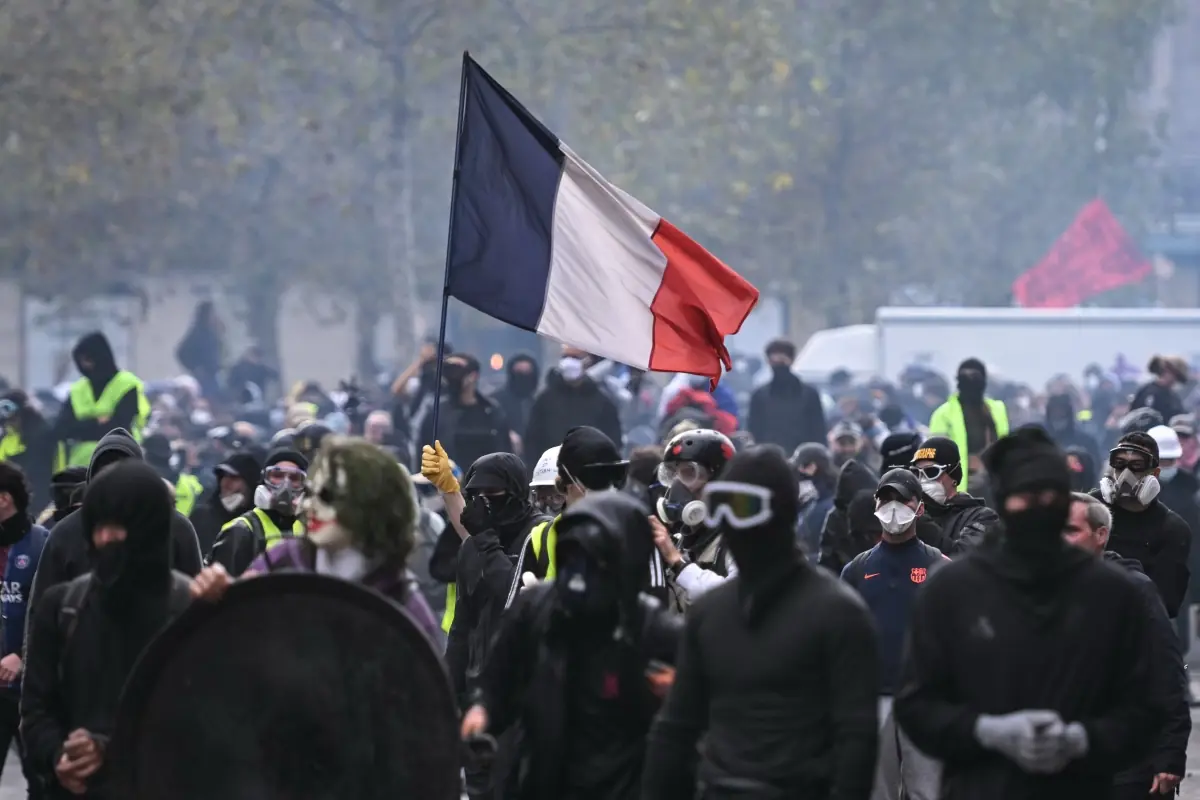
Protesters take to the streets in cities across France to demand higher wages and better working conditions. (Foto: Instagram)
More than 140,000 people took to the streets in cities across France on Tuesday, Nov. 17, protesting the loss of purchasing power and demanding better working conditions. The demonstrations, called by labor unions, brought together high school and university students, retirees, and public- and private-sector workers. Unions called for wage increases and concrete government action to address the rising cost of living.
Estimates of turnout varied widely. Labor unions said more than 500,000 people demonstrated nationwide, including 175,000 in Paris. France’s Interior Ministry counted 146,000 participants, with 28,000 in the capital. Demonstrations took place in Marseille, Toulouse, Lille, Lyon, Bordeaux, Strasbourg, La Rochelle, and Metz. Municipal authorities in Marseille and Toulouse each estimated crowds of about 5,000, while unions put the figures at 80,000 and 20,000, respectively.
Participation was lower than at the previous major demonstrations on Nov. 5, and the impact on public services was limited. The French government said fewer than 3% of public employees joined the stoppage, including staff at ministries, municipal governments, and university administrations. In the previous mobilization, the share had reached nearly 10%.
Young people remained a notable presence. High school and university students joined the protests alongside student groups and youth labor organizations, continuing a role they have played in the social movement in recent weeks. Their participation reflects concerns beyond wages, including career prospects, the quality of public services, education, and living conditions, according to the account of the demonstrations.
In Paris, Sophie Binet, secretary-general of the General Confederation of Labor (CGT), called for talks involving all affected groups, including private-sector workers, students, and public employees. She urged the government to put forward measures that address their demands. Binet said an effective response to workers’ concerns was necessary to bring the ongoing demonstrations to an end.
Union frustration has grown after the government again rejected a general pay increase for public employees. The decision came days after the government confirmed an adjustment to France’s minimum wage, known as the Smic, for private-sector workers. Unions say the measures do not make up for public employees’ lost purchasing power, and they have criticized the absence of a broader wage policy while calling for negotiations on pay and working conditions.
The protests are unfolding as the government seeks approval for the 2027 budget, which includes measures intended to reduce the public deficit. At the same time, it faces public dissatisfaction and criticism of cuts and limits on investment in public services. The continuing demonstrations underscore Prime Minister Sébastien Lecornu’s difficulty in reaching an agreement with unions and easing discontent across different parts of society. The wave of mobilizations has gained strength since October, bringing together social movements, students, unions, and workers; organizations say they intend to maintain pressure until the government responds to their demands.