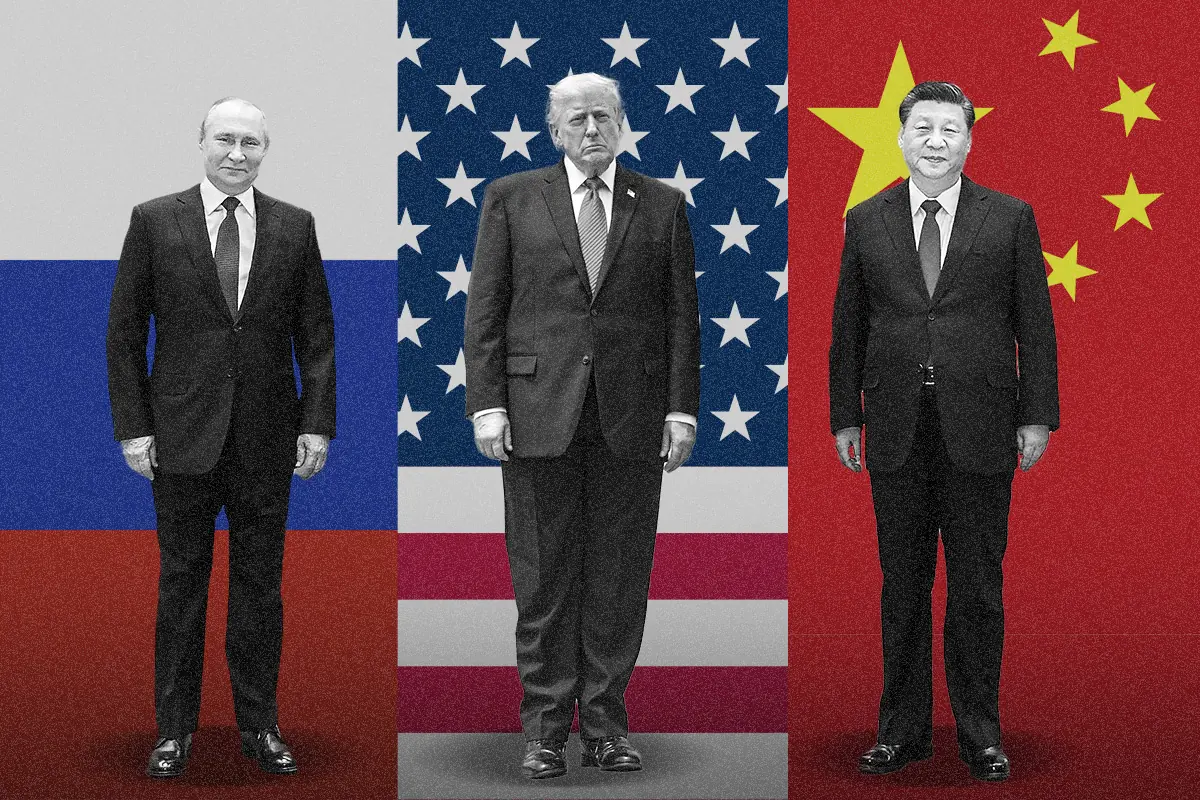
Donald Trump, Vladimir Putin and Xi Jinping are scheduled to meet in Shenzhen, China, on Nov. 19, with nuclear arms control, Iran and Ukraine among the issues that could shape the talks. (Foto: Instagram)
Donald Trump, Vladimir Putin and Xi Jinping are scheduled to meet Thursday, Nov. 19, in Shenzhen, China, as wars, geopolitical rivalries and uncertainty over international security loom over the gathering. The leaders of the United States, Russia and China—the world’s three largest military powers—are expected to sit down at 2:30 p.m. local time, or 3:30 a.m. in Brazil. The meeting is planned on the sidelines of the Asia-Pacific Economic Cooperation leaders’ summit.
The official agenda has not been released. Beijing has said the talks should help preserve world peace, improve communication among the powers and promote stability in international relations. Trump has expressed interest in discussing nuclear arsenal reductions and the conflict involving the United States, Israel and Iran. Moscow is also interested in the war in Ukraine, while the technological rivalry between Washington and Beijing—and U.S. concerns about Chinese espionage and access to advanced chips—could figure into the discussions.
Each leader is approaching the meeting with different aims. Trump wants to project U.S. leadership, advance nuclear arms control and secure Chinese help in pressuring Iran. Putin is seeking international recognition and an opportunity to discuss the Ukraine war. Xi aims to strengthen China’s role as a global broker and promote a multipolar world order. A joint statement and continued dialogue are among the diplomatic outcomes considered possible, but concrete nuclear agreements or joint declarations on Ukraine and Iran are considered unlikely given the governments’ differences.
Nuclear arms control has gained urgency following the end of the New START treaty, which set legally binding limits on the strategic nuclear arsenals of the United States and Russia. Before the treaty ended, Putin proposed that the two countries informally observe its limits for another year. Washington did not agree to formalize an extension, and Trump has advocated negotiating a modernized agreement that would include China. He has argued that any new arrangement should account for China’s expanding arsenal and changes in the three countries’ military capabilities. Beijing, however, says its nuclear stockpile remains far smaller than those of its counterparts.
Estimates from the Stockholm International Peace Research Institute and the Federation of American Scientists put the global nuclear stockpile at 12,187 warheads at the start of 2026. Russia had about 5,420, the United States 5,042 and China approximately 620. Together, Russia and the United States held about 86% of the world’s nuclear inventory. Marcos Antônio de Andrade, a foreign trade professor at Mackenzie Presbyterian University, said Trump wants China included because it no longer occupies a secondary position in nuclear affairs. Andrade said a three-country agreement could be a diplomatic milestone for Washington and offer greater security to U.S. allies in Europe. He also said Trump could present progress as a demonstration of international leadership. “For Trump, an agreement involving all three countries could be called historic, since no U.S. president has achieved it,” Andrade said, adding that a foreign policy accomplishment could help offset recent electoral losses by Trump’s party.
The conflict involving Iran and restrictions on maritime traffic through the Strait of Hormuz have added an energy dimension to the tensions. China is a major buyer of Iranian oil and relies on Middle Eastern shipping routes for part of its energy supply, making instability in the region a direct concern for Beijing. Andrade said Trump could seek to use China’s influence in the Iranian oil market to increase economic pressure on Tehran by persuading Beijing to reduce its purchases. He described the meeting as a possible form of indirect pressure, saying Trump may want Tehran to see its two main partners sitting with Washington to discuss its future.
Ukraine is another potential point of friction. Since Russia’s full-scale invasion began in February 2022, Moscow has sought to consolidate territorial gains and secure favorable terms for a possible peace agreement. Putin wants Russia recognized as a leading power in decisions on global security, and Xi’s involvement in any discussion could increase diplomatic pressure on Kyiv. Andrade said Moscow would like China to act as a mediator, a role that could reduce Ukraine’s and European countries’ influence in negotiations. But openly backing Russia’s demands could conflict with Beijing’s stated defense of national sovereignty and noninterference in other countries’ domestic affairs.
Espionage may also come up in talks between Trump and Xi, though there is no confirmation that the presidents will discuss the issue. Jensen Huang, Nvidia’s former CEO, is scheduled to voluntarily answer questions from three U.S. House committees on Dec. 1. The hearing follows allegations that Alice Huang, with whom he had an extramarital relationship, may have ties to Chinese intelligence. Trump has said he could raise the matter with Xi. The case reflects the wider technological and strategic competition between Washington and Beijing.