




Across the centuries, people have created laws and judicial rules to organize society, set limits and support coexistence. Most laws address familiar matters such as safety, rights and responsibilities. Others stand out because they appear unusually specific, surprising or difficult to believe. Their stories can attract attention, but understanding them requires care: a rule may be old, narrowly applied, inaccurately described or not actually in force.
Differences in culture, tradition, politics and history help explain why societies establish rules that may seem strange to people elsewhere. A regulation can also become separated from its original purpose as it is repeated over time. In some cases, a widely circulated account describes a genuine rule; in others, the story has no confirmed basis as current law. The examples below therefore include both reported legal provisions and popular claims whose status is uncertain.
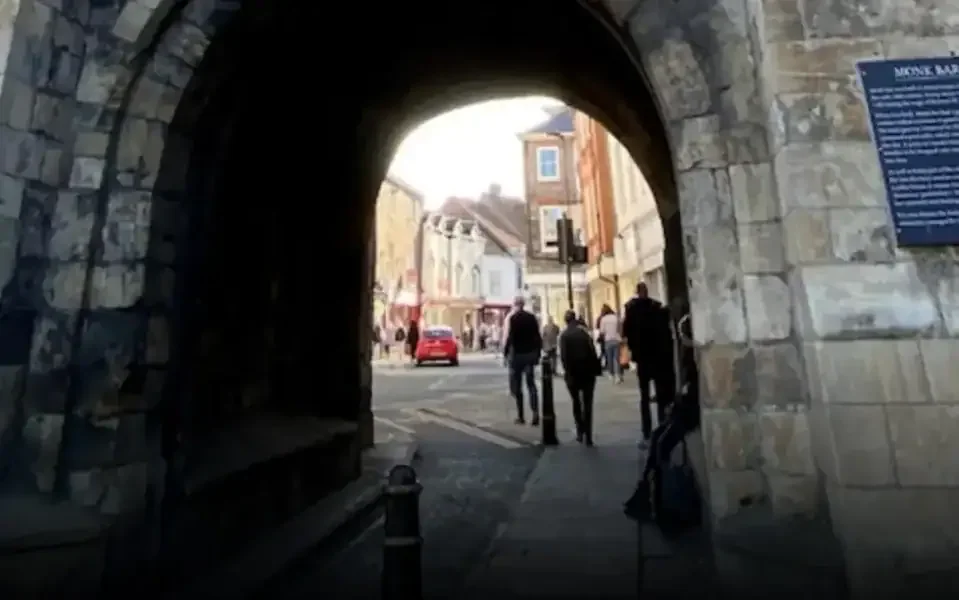
One account concerns York, England. A story associated with the city says that it was permissible to kill a Scotsman inside the city walls if he was carrying a bow and arrows. The claim is presented as an old and extraordinary rule, but the account itself does not establish its legal status or provide details about its origin. It is an example of why a striking historical story should not automatically be treated as a statement of law that people can rely on today. The reference to a weapon and a particular location also illustrates how a rule, if it existed in a specific historical setting, could have reflected circumstances very different from those of modern life.
Singapore is cited for a restriction on the sale and importation of chewing gum, with specific exceptions, including authorized therapeutic products. According to the description, people who violate the rules may face fines of up to $1,000. Unlike some of the stories in the collection, this example is described as a rule with exceptions rather than an unrestricted prohibition. That distinction matters: legal restrictions often define what is covered, identify permitted circumstances and set out possible penalties. A short summary cannot replace the full wording of a regulation, but it can draw attention to the way a rule may treat ordinary products differently depending on their purpose or authorization.
Milan, Italy, is linked to a familiar story about a municipal rule requiring people to smile in public, except at funerals and during visits to hospitals. The account also makes an important qualification: despite the story’s popularity, there is no confirmation that it is a law currently in force. That caveat changes how the example should be understood. It is best treated as a widely repeated curiosity rather than as reliable guidance about what residents or visitors are legally required to do. The story’s longevity shows how an unusual claim can circulate even when its status has not been established.
In Alabama, in the United States, the gallery points to a prohibition on driving while blindfolded. The description notes that the conduct may seem obviously dangerous, yet it has become one of the legal curiosities that people discuss. The example also highlights a general feature of law: rules can state explicitly that a particular act is prohibited even when the danger appears self-evident. Laws commonly define conduct and its consequences so that expectations are clear, rather than relying only on a person’s judgment about what is safe. The short description does not provide additional details about the provision or its application, so it should not be read as a complete account of the relevant law.
France is associated with another popular tale: that it is forbidden to name a pig Napoleon, supposedly to protect the reputation of the famous French emperor. The account presents this as a well-known story, but it does not establish that such a prohibition exists as law. As with the story about smiling in Milan, the distinction between a legal rule and a repeated anecdote is important. A claim can be memorable precisely because it sounds unusual, but familiarity alone does not confirm that it is legally accurate.
A different kind of rule is described in Longyearbyen, Norway. The account says that traditional burials are not permitted in the local cemetery because frozen ground makes the decomposition of bodies difficult. It also says that people who are seriously ill need to be transferred to other regions. This example is presented as a response to local physical conditions rather than as a rule created simply to regulate everyday behavior. It illustrates how environmental circumstances can affect practical decisions about burial and care. The description is brief, however, and does not provide the full scope or wording of the relevant arrangements.
The final example concerns an old English law involving the transportation of salmon under circumstances considered suspicious. Though the rule may sound like a joke when summarized in a few words, the account connects it to efforts to combat the sale of fish obtained illegally. Here, the seemingly peculiar wording points toward a more practical purpose: authorities may use specific rules to address the handling or trade of goods when they suspect illegal activity. The example also shows how a law can appear odd when removed from the problem it was designed to address. Without the full legal text and context, the brief description should not be taken to explain every circumstance covered by the legislation.
Taken together, these examples show why unusual laws and legal stories continue to attract attention. Some are presented as rules with a defined purpose or a specific exception; others are better understood as claims whose current legal standing is unconfirmed. Historical circumstances can differ sharply from present-day values, and a rule that once addressed a particular situation may not operate in the same way now. Likewise, a vivid anecdote can survive in public conversation long after its legal basis has become uncertain.
The collection is not a guide to the law in any of the places mentioned. It offers a set of curiosities that prompt questions about how rules develop, how they reflect the societies that create them and how their meaning can change when summarized or retold. To determine whether a particular provision is currently in force, what it covers or what consequences it carries, readers would need to consult an authoritative source for that jurisdiction. The stories are striking, but their details and legal status matter just as much as their unusual wording.