Pope Leo XIV’s South American tour combines public religious events with meetings aimed at strengthening the Vatican’s ties across the region. (Foto: Instagram)
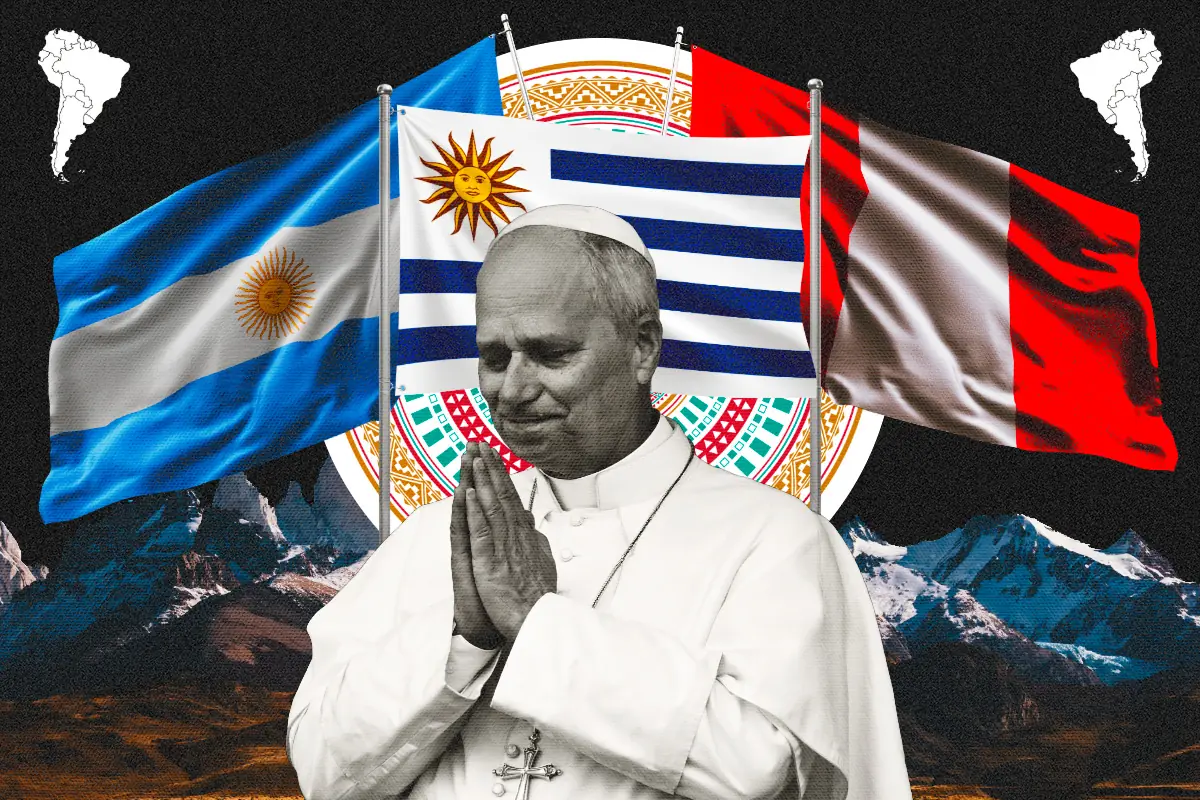
Pope Leo XIV’s 12-day trip through South America is combining religious events with efforts to strengthen the Vatican’s political and diplomatic ties across the region. After visits to Uruguay and Argentina, he arrived in Peru on Nov. 11 and is scheduled to remain there through Nov. 16. The trip began Nov. 6, is the sixth international mission of his pontificate and includes stops in 10 cities across the three countries. His itinerary features meetings with heads of state, civil society representatives, religious leaders and local communities. Peru holds particular personal significance for Leo XIV: He lived there for more than two decades and served as a missionary and bishop.
The tour comes as Catholic identification has declined in parts of Latin America. A Pew Research Center survey released in January 2026 found that the share of adults identifying as Catholic had fallen in the six countries it examined: Argentina, Brazil, Chile, Colombia, Mexico and Peru. In each country, about two in 10 adults said they had left Catholicism since childhood, while evangelical churches and people with no religious affiliation had gained ground. The changes pose a challenge for the Catholic Church as it seeks to maintain its influence and connection with Latin American communities. The trip’s official meetings and public celebrations are intended to reinforce those ties while allowing the pope to address themes including peace, human dignity, social justice and community protection.
Uruguay, where Leo XIV’s tour began, has a longstanding secular tradition and one of Latin America’s lower proportions of Catholics. Recent surveys indicate that roughly 35% to 36% of its population identifies as Catholic, while more than half report no religious affiliation. Before Leo XIV, only Pope John Paul II had visited the country, traveling there in 1987 and 1988. Uruguay’s separation of religion and public institutions gathered momentum in the late 19th and early 20th centuries. During the government of José Batlle y Ordóñez, measures reduced religion’s role in public life; crucifixes were removed from public hospitals in 1906. The country’s 1919 Constitution later formalized the separation of church and state.
In Montevideo, President Yamandú Orsi welcomed Leo XIV, who attended a ceremony at Independence Square with government officials, civil society representatives and diplomats. In his remarks, the pope discussed Uruguay’s history and emphasized fraternity and care for others. His pastoral program also included Paysandú and Florida. About 40,000 people attended a Mass he celebrated in Paysandú, while thousands took part in a prayer vigil at Montevideo’s Centenario Stadium. He also met with residents of the Casavalle community and representatives of the education sector. The events drew attention in a country where religion has a relatively limited role in public life.
The Argentina leg, from Nov. 8 to Nov. 11, brought Leo XIV to Buenos Aires, Córdoba and Luján, and marked the first papal visit to the country since John Paul II traveled there in 1987. Argentina is the birthplace of Pope Francis, Leo XIV’s predecessor, who never returned after his election in 2013. Francis had said in a 2023 interview with Argentine outlet Infobae that the country’s political and social circumstances were among the factors he considered when weighing a visit. He was concerned that a pope’s presence could be used politically and deepen divisions, while saying he hoped to return. During Leo XIV’s four days in Argentina, he met President Javier Milei, officials, labor representatives and religious leaders, and visited a facility serving people with disabilities. His appeals for workers’ rights, dignity for people with disabilities and social justice came amid the Milei government’s austerity measures. On Nov. 11, he visited the Devoto prison complex in Buenos Aires, spoke with inmates about rehabilitation and the possibility of starting over, then celebrated Mass at the Basilica of Our Lady of Luján and called for unity and reconciliation.
The Peru leg began Nov. 11 and is scheduled to conclude Nov. 16. Leo XIV is visiting Lima, Chiclayo, Cusco and Pucallpa, with religious celebrations and meetings involving officials, young people, missionaries and representatives of Amazonian communities. In Chiclayo, where he served as a missionary, Augustinian religious and bishop, the schedule included a Mass in the Pimentel area and meetings with church members and the university community. Further events were planned with inland communities, Amazonian representatives in Pucallpa and people in Cusco. The itinerary is set to end with a Mass in Lima on Nov. 16, followed by the pope’s departure for Rome; his arrival in the Italian capital is expected on Nov. 17. The return to Peru has personal significance for Leo XIV and also brings the Church into contact with communities facing social inequality, environmental challenges and the concerns of Indigenous populations.