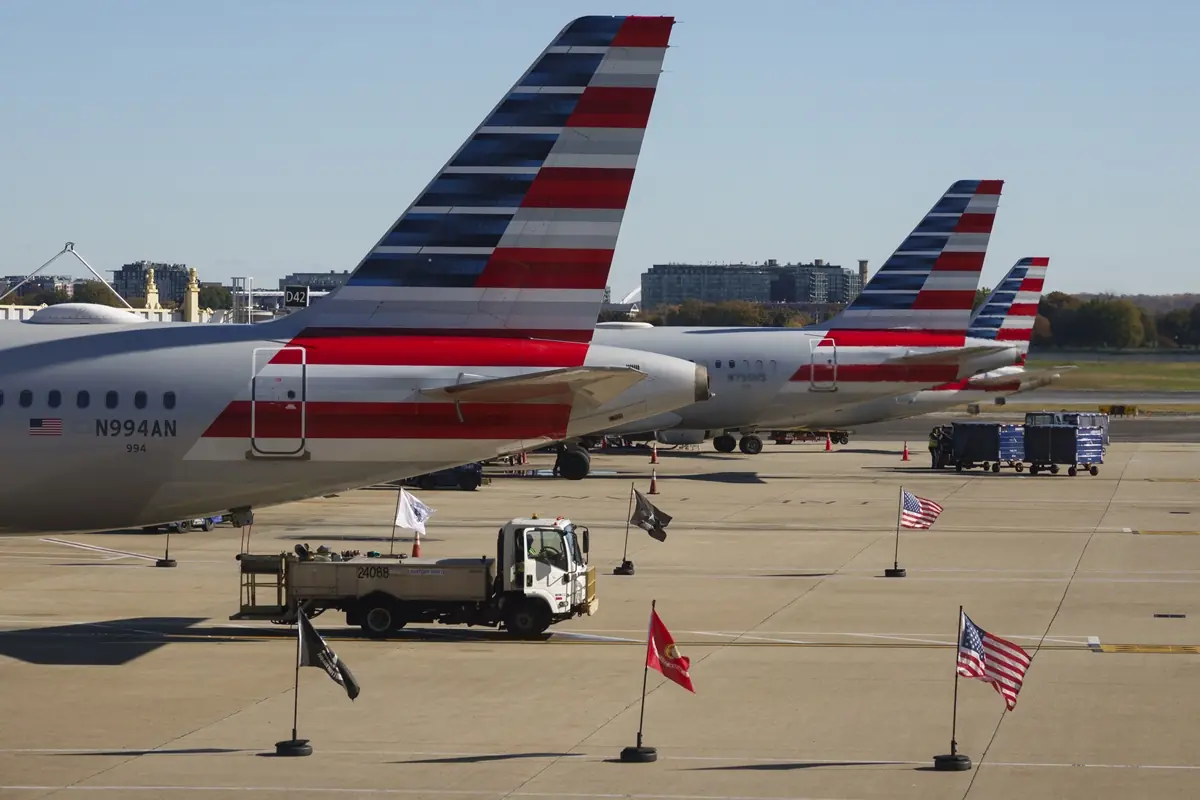
The FAA lifted its four-hour restriction on takeoffs Friday night, allowing U.S. airports to resume departures as thousands of flights faced cancellations and delays. (Foto: Instagram)
A four-hour halt to air traffic in the United States affected nearly 16,000 flights on Friday, Nov. 13. By late that night, 7,614 flights had been canceled and 8,120 delayed, according to flight-tracking site FlightAware. The Federal Aviation Administration (FAA) authorized airports to resume departures at about 10 p.m., though disruptions were expected to continue for days.
For Saturday, 2,145 flights had already been canceled, and 330 delays were forecast. The FAA said in a statement that passenger safety remained its top priority and that it had lifted the restriction on takeoffs, allowing some flights to resume.
Chicago’s airport was the most affected, with 464 cancellations. U.S. airlines began returning to service after the FAA’s authorization. American Airlines said it would operate as many remaining flights as possible overnight while preparing for a stronger recovery over the following days. United Airlines said it planned to operate some flights Friday night.
Transportation Secretary Sean Duffy attributed the shutdown to the age of the country’s air traffic system. He said there had been inconsistencies between radar systems and airport towers. Duffy and Homeland Security Secretary Markwayne Mullin used the disruption to press Congress for funding to modernize the system.
At a White House news conference, Duffy said the president had asked Congress over the past year to fully fund construction of an entirely new air traffic control system. The air traffic system had been unable to operate for about four hours, and the FAA’s decision to allow takeoffs ended the suspension.