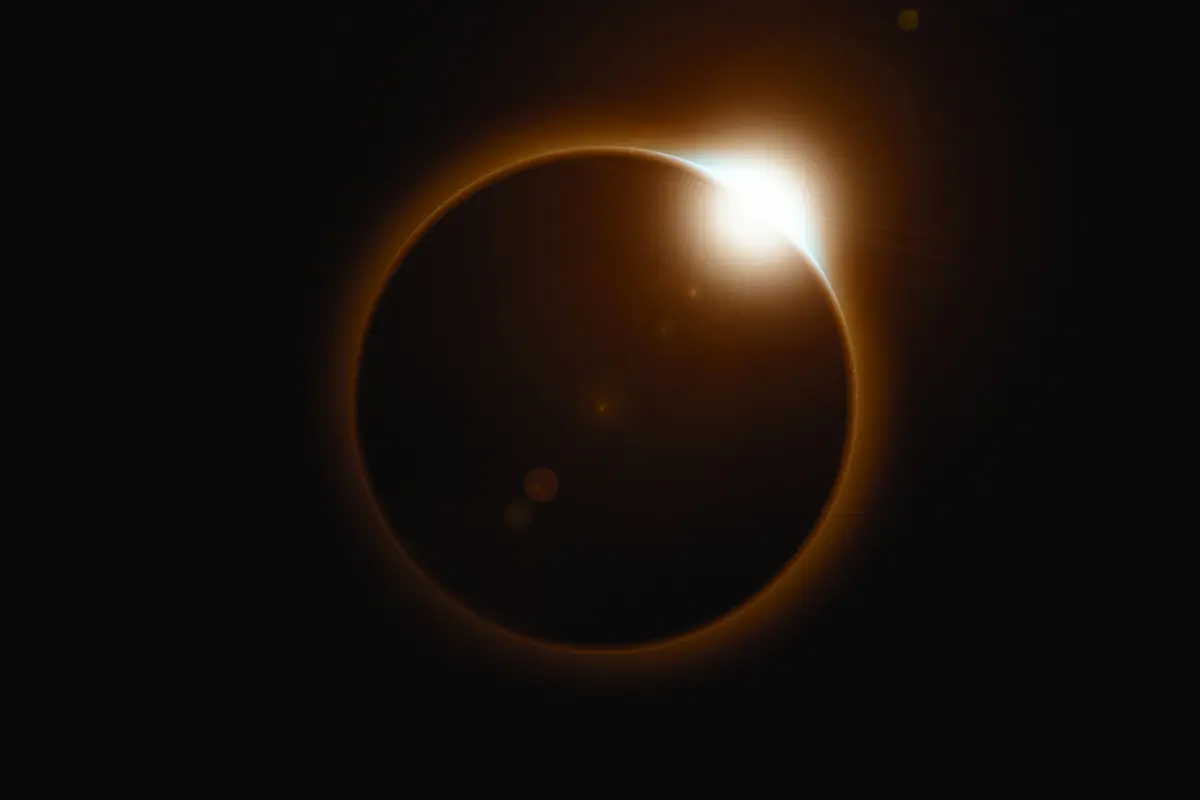
A total solar eclipse on Aug. 2, 2027, is expected to last about six minutes and 23 seconds at its peak over Egypt. (Foto: Instagram)
A total solar eclipse scheduled for Aug. 2, 2027, is expected to last about six minutes and 23 seconds, according to NASA. The Moon will completely cover the Sun along the eclipse’s path, making it one of the longest astronomical events of its kind this century.
The 2027 eclipse will not set the duration record: a total solar eclipse in July 2009 lasted six minutes and 39 seconds. But NASA calculations indicate the 2027 event may be the longest for the following 87 years. The next eclipse expected to exceed its duration is forecast for June 3, 2114, when totality could last about six minutes and 32 seconds.
A total eclipse occurs when the Moon’s umbral shadow crosses Earth and the Moon blocks the Sun completely. NASA projections place the 2027 eclipse’s peak in Egypt. The total eclipse is also expected to be visible in Spain, Morocco, Libya, Tunisia, Saudi Arabia and Somalia, but not in Brazil.
Astronomer Marcelo Domingues, a member of the Brazilian Meteor Observation Network (Bramon), said the darkness along the eclipse’s path will not be as complete as the darkness of night. He described conditions as resembling twilight about four minutes after sunset, when some stars may be visible.
Although Brazil will not see the 2027 total eclipse, an annular eclipse is expected there on Feb. 6, 2027, lasting seven minutes and 51 seconds. The event should appear as a partial eclipse across most of the country, Domingues said, while the far south, including Chuí, will see an annular eclipse. In Barra do Chuí, the ring-shaped phase is expected to last about four minutes and 40 seconds. The next annular eclipse visible in Brazil is scheduled for Jan. 26, 2028, and will be visible in the country’s North Region.