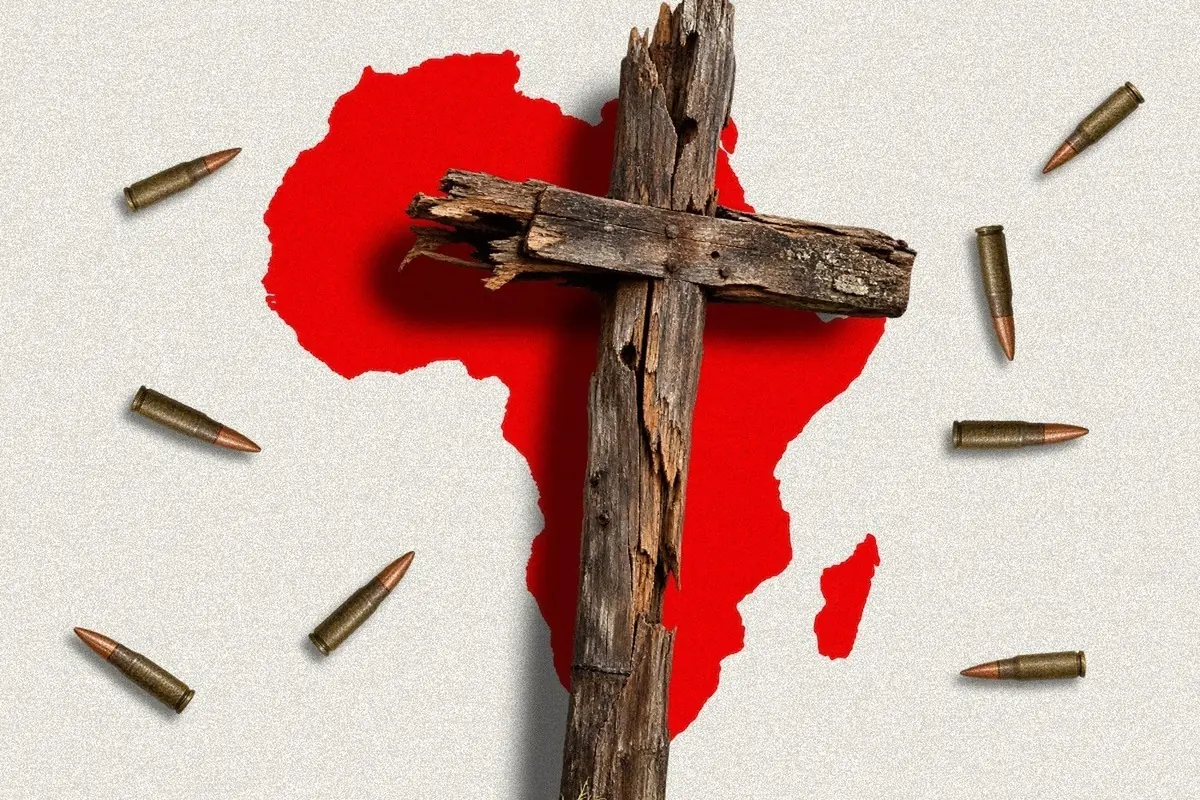
An attack claimed by ISIS killed 15 Christians in Ituri province in the Democratic Republic of the Congo, amid growing concerns about persecution of Christians in Africa. (Foto: Instagram)
Fifteen Christians were killed in an attack claimed by the Islamic State group, also known as ISIS, in Ituri province in the Democratic Republic of the Congo. The killings are among the incidents cited amid growing concern about increased persecution of Christians in African countries as terrorist groups expand their operations.
The concern is addressed in “Persecuted but Not Forgotten,” a report published last month by the pontifical foundation Aid to the Church in Need (ACN). The organization, which is directly affiliated with the pope, assists Christians living amid persecution, war and extreme hardship. The report says persecution of Christians rose 55% across 18 countries studied from Aug. 1, 2024, through June 30, 2026. The countries are Egypt, Mali, Turkey, Nicaragua, Burkina Faso, Nigeria, North Korea, Sudan, Vietnam, Mozambique, Syria, Iraq, Iran, Pakistan, India, China, Eritrea and Myanmar.
Four of the seven African countries on the list—Mali, Burkina Faso, Nigeria and Mozambique—saw worsening repression and persecution, according to the report. Although conditions differ among them, all face armed conflict and expanding terrorist activity. The report says terrorist groups, motivated by what it describes as a distorted interpretation of Islam, shifted their focus to Africa after losing ground in the Middle East. The Global Terrorism Index 2026, published by the Institute for Economics and Peace, found that six of the 10 countries most affected by terrorism in 2025 were in Africa. Those six countries recorded a combined 3,424 deaths from terrorist acts; attacks worldwide killed 5,582 people that year.
The report attributes the expansion of groups such as ISIS to internal instability, including weak governance, ethnic tensions and military coups. Christian communities have been disproportionately affected, the study says, because they are often targeted by Islamist and other extremist groups. In Nigeria, more than 1 million Christians have had to flee their homes amid a wave of violence, primarily attributed to jihadist groups, according to the report.
In Burkina Faso, about 40% of the country’s territory is under the control of jihadist groups, including ISIS and Jama’at Nasr al-Islam wal Muslimin (JNIM), the report says. It also describes Christians being forced to adopt Islamic practices based on a radical interpretation of the religion. Those who refuse face the risk of expulsion from their homes or death.
The report also documents religious persecution tied to authoritarianism and religious nationalism outside Africa. It cites China, North Korea and Nicaragua as places where state repression and surveillance affect Christians’ religious practice, despite formal provisions for religious freedom. In China, priest Ma Xianshi was detained in November 2025 and later tried over the sale of books containing Christian hymns. Authorities accused him of selling the books outside what they classify as “faith communities.” He was sentenced to 18 months in prison in June 2026 but was released on July 22, days later.
In India, ACN counted more than 700 incidents of violence against Christians in 2025, including disruptions of religious events, physical assaults and vandalism at churches. The report notes that most of the population is Hindu, including Prime Minister Narendra Modi, and says international organizations have warned of rising tensions against religious minorities since Modi and his Hindu nationalist Bharatiya Janata Party (BJP) came to power. In February 2026, residents of Kapena village in Odisha prevented a Christian family from burying a child who had died of kidney failure after the family refused to renounce its faith. The child’s father, Krutibas Santa, said villagers opposed the burial in the village cemetery. According to accounts collected by ACN, local authorities eventually mediated an agreement allowing burial on the family’s land, but without a religious ceremony or Christian symbols such as a cross.