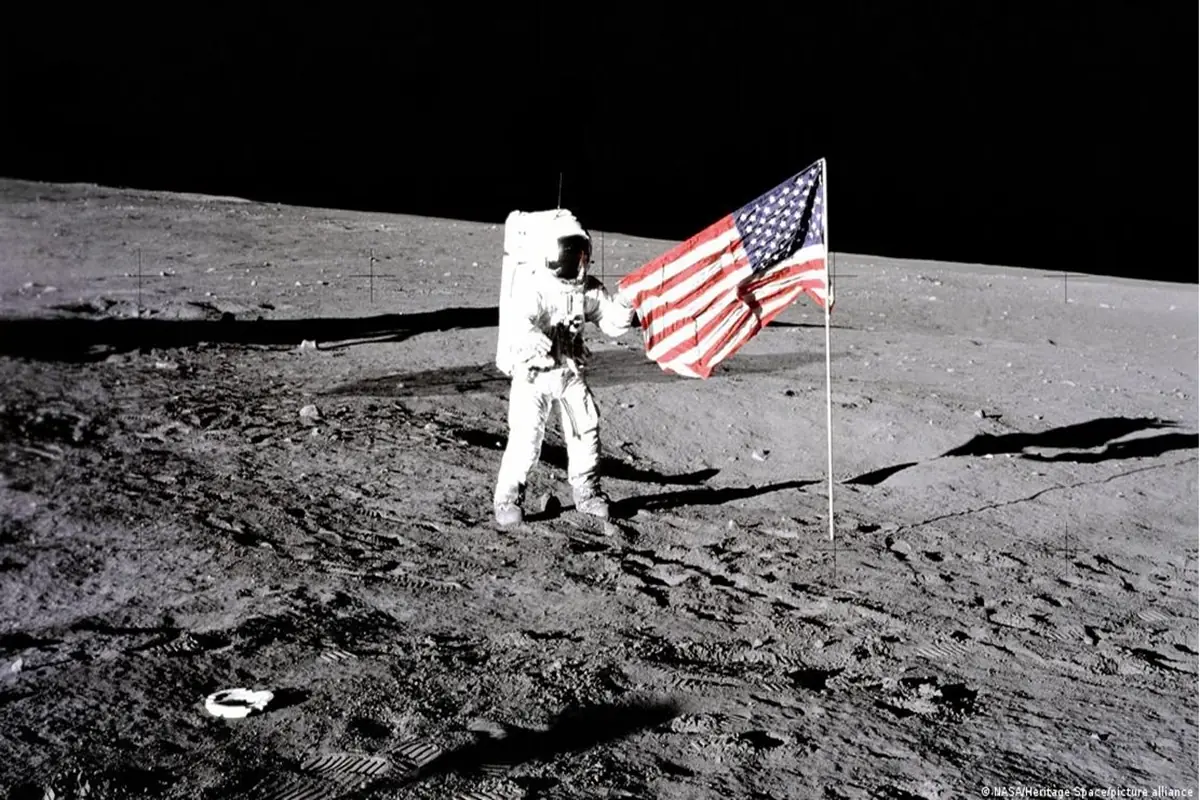
NASA is accepting applications through Dec. 3 for astronaut candidates who will train to support future lunar missions. (Foto: Instagram)
NASA is accepting applications for its next class of astronaut candidates, who will be trained to live and work on the lunar surface and help carry out missions returning humans to the Moon. The annual salary is $164,395, equivalent to approximately 919,510.55 Brazilian reais. As the Artemis program advances plans for a lunar base, selected astronauts are expected to support a lasting human presence on the Moon and help prepare for future exploration of Mars.
NASA says experience from the missions will help develop the technology, capabilities and knowledge needed for humanity’s next major step into deep space. Applications are open through December 3. Applicants must be U.S. citizens and hold a master’s degree in a science, technology, engineering or mathematics field from an accredited institution. They must also have at least three years of relevant professional experience after completing their education.
Pilots may meet the experience requirement through flight hours. Applicants with experience flying high-performance jet aircraft must have 750 hours as pilot in command. Those with other fixed-wing aircraft must have 1,500 total hours, including 750 as pilot in command. For rotary-wing aircraft, the requirement is 1,000 total hours, including 300 as pilot in command. For physicians, residency may count as professional experience, but it must be completed by July 2027.
Candidates must pass NASA’s long-duration spaceflight physical and demonstrate strong leadership, teamwork and communication skills. The agency will invite a small group of the most qualified applicants to interviews at Johnson Space Center in Houston. About half of those interviewed will be invited for a second interview, and NASA will select the new astronaut candidates from that group.
Those selected will complete two years of training at the center. The program covers core astronaut skills, including spacewalks, space station operations, flying T-38 jets and controlling a robotic arm. Candidates will also study subjects such as extravehicular activities and lunar geology, preparing them for the work NASA says will be needed for upcoming missions.
NASA last opened astronaut applications in 2024. From more than 8,000 applications, the agency selected 10 candidates in 2025; they are now completing nearly two years of training. Since 1960, NASA has selected 370 people for astronaut-candidate training, and it currently has 32 active astronauts. NASA Administrator Jared Isaacman said those chosen could walk on the Moon, live and work at the lunar base, and help develop the systems and operations that could eventually take crews to Mars. He said the missions will require technical excellence, sound judgment, teamwork and courage. He also described the astronaut corps as a tradition of Americans taking on extraordinary challenges in service to the nation and invited qualified applicants to help shape what he called humanity’s next great adventure.