
Federal Reserve Vice Chair for Supervision Michelle Bowman called for closer U.S.-Brazil cooperation to combat money laundering, drug trafficking and other cross-border criminal activity at an international meeting in Brasília on Nov. 27. (Foto: Instagram)
Michelle Bowman, the Federal Reserve’s vice chair for supervision, said financial authorities in the United States and Brazil should cooperate more closely to counter money laundering, drug trafficking and other criminal activity. She made the remarks Friday, Nov. 27, at an international meeting in Brasília, where she warned that financial risks can cross national borders as banking and economic systems become more interconnected.
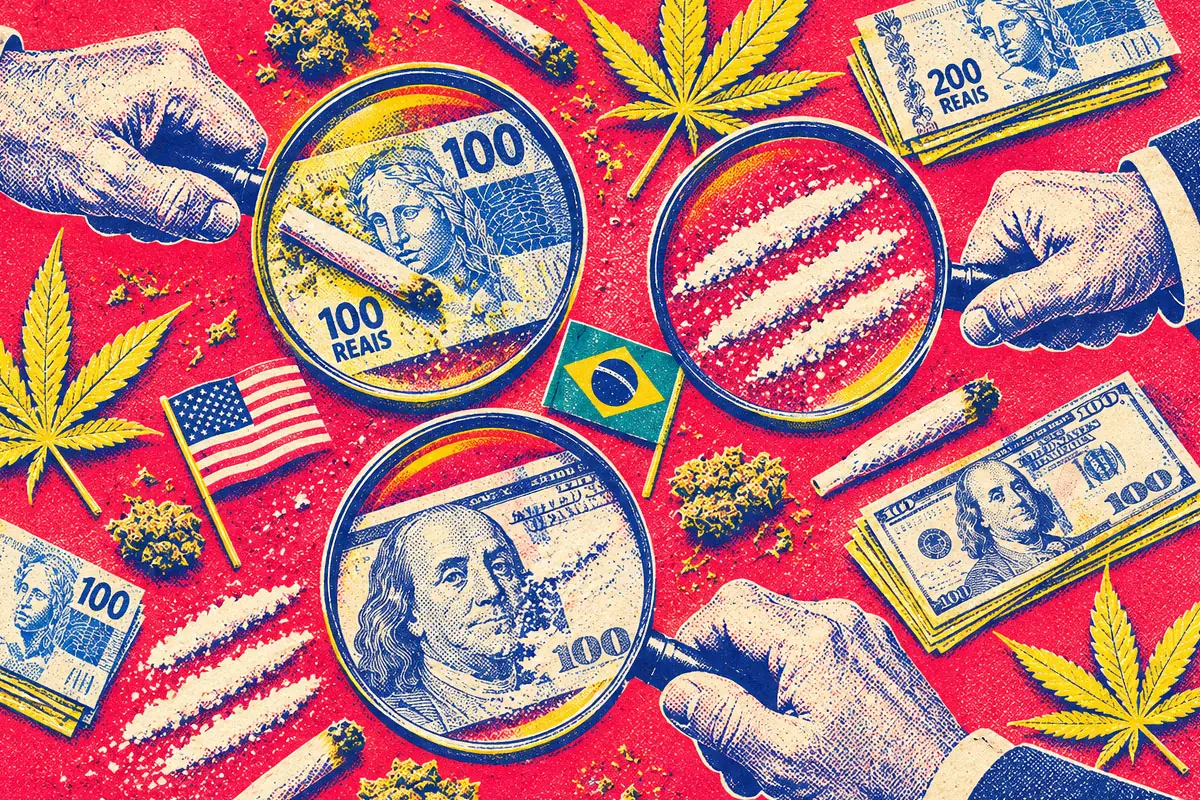
Bowman said integration can support economic development but also create channels for fraud, money laundering and illicit financial networks tied to transnational criminal organizations. “Financial institutions and supervisors must address threats arising from money laundering, fraud, illicit financial networks and transnational criminal organizations,” she said. The meeting was held in partnership with the Central Bank of Brazil, the Association of Supervisors of Banks of the Americas, the Basel Committee on Banking Supervision and the Financial Stability Institute.
Bowman discussed transnational criminal organizations but did not specifically name Brazil’s First Capital Command, known as PCC, or the Red Command, known as CV. The U.S. government under President Donald Trump has classified the two Brazilian groups as foreign terrorist organizations since June 2026, a designation the Brazilian government disputes.
The remarks come amid disagreements between Brasília and Washington over how to confront criminal groups operating in Brazil and elsewhere in Latin America. Brazil’s government favors police cooperation, information sharing and efforts to disrupt criminal groups’ financing. The United States has also used measures to identify and sanction networks moving illicit funds, including action against financial structures linked to criminal organizations. Washington has urged other countries to strengthen tracking, asset-blocking and cooperation tools, an approach that puts pressure on partners such as Brazil to expand their efforts.
President Luiz Inácio Lula da Silva has presented Trump with proposals to broaden bilateral cooperation against transnational organized crime. The proposals are still awaiting a concrete response from Washington. Discussions between the governments also involve the effects of U.S. measures on Brazil’s financial system and sovereignty, as well as the mechanics of cooperation between the two countries.
Bowman called for financial supervisors across the Americas to deepen their ties by exchanging information, practical experience and technical expertise. She said economic and banking connections can transmit risks that affect institutions and communities in different parts of the continent. Established communication channels between national authorities, she added, are especially important during financial crises or when threats involve cross-border operations. Bowman pointed to the Association of Supervisors of Banks of the Americas as a forum that could help build institutional capacity and coordinate responses to shared challenges.
She also urged changes to banking supervision so regulators can respond more effectively to significant risks. Identifying problems is not enough if agencies cannot take corrective action promptly, she said, criticizing excessive bureaucracy, unclear responsibilities and structures that impede decisions. Bowman cited the March 2023 failure of Silicon Valley Bank in the United States, saying supervisors had identified vulnerabilities before its collapse but did not take measures sufficient to address the problems that contributed to it. She said supervisory effectiveness should be judged not by the number of inspections or reports produced, but by whether regulators can identify, reduce and correct significant risks before they lead to more serious consequences.