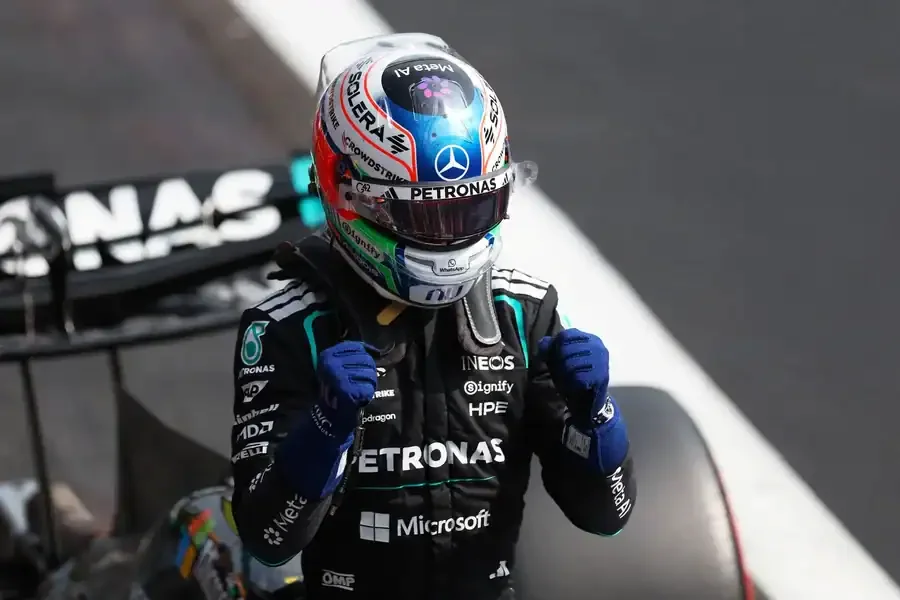
Kimi Antonelli made a strong start to the Qatar Grand Prix weekend in Formula 1. After leading the first free-practice session, the Italian repeated the result in the second session on Friday, November 27, and ended the day with the fastest lap at Lusail. His best time was 1:23.077.
Mercedes occupied the top two positions in the session. George Russell finished second behind his teammate, while McLaren drivers Lando Norris and Oscar Piastri took third and fourth, respectively. Max Verstappen completed the top five.
Among the Brazilian drivers, Gabriel Bortoleto finished 11th and Rafael Câmara was 17th. The session’s order records where the drivers placed relative to one another during this practice; it does not determine the starting positions for the Grand Prix or establish the final race result.
The contest for the top spot began between the two Mercedes drivers. Russell moved into first place during the opening minutes, but Antonelli soon responded. With a lap of 1:23.077, the Italian set the quickest time of the session and took the lead. Russell remained second, giving Mercedes the first two places in the final order.
The McLaren pair followed. Norris placed third, ahead of Piastri in fourth, and Verstappen was fifth. The available session report does not give the lap times for those drivers, so the recorded positions show their order without specifying the time gaps among them. The same distinction applies to the rest of the field: the report identifies Bortoleto in 11th and Câmara in 17th, but does not provide their individual times.
Free-practice sessions allow teams and drivers to run on track and gather information during a Grand Prix weekend. A fastest lap in practice is a measure of the quickest recorded lap in that session, not a result that by itself awards the race win or sets the race grid. Drivers can complete laps at different points in the session, and the overall order is based on the times recorded. The session result therefore provides a snapshot of the day’s running rather than a final competition outcome.
The second practice was interrupted twice. Race control first brought out the red flag so that the track could be cleaned. A red flag halts the session, requiring drivers to stop their running and return to the pit lane or otherwise follow the instructions given by race control. The interruption means that the scheduled session is temporarily suspended while the issue is addressed.
The session was stopped again after Pierre Gasly spun and became stuck in the gravel. The second stoppage added another interruption to the planned running. Gravel areas beside a circuit are intended to slow or stop a car that has left the track, but a car that becomes trapped may need to be recovered before the session can continue. The report does not specify what caused Gasly’s spin or describe any damage to his car.
Because of the delays, the practice session was extended by 13 minutes. Extending a session after interruptions gives drivers additional time on track compared with the original schedule. It does not change the fact that the recorded result remains a practice classification, and the report does not indicate whether every driver used the extra time in the same way.
Lewis Hamilton encountered a separate problem near the end of the session. The British driver told his team over the radio that he had lost power and had to stop his Ferrari. The incident prompted the deployment of the virtual safety car. The report does not identify the source of the power loss, say whether the issue was resolved, or give further details about the car after it stopped.
A virtual safety car is different from a full red-flag stoppage. Under a virtual safety car, drivers are instructed to reduce speed and follow the applicable control procedures while the session remains in progress. The measure allows race control to manage a hazard without bringing all cars back to the pit lane in the same way as a red flag. In Hamilton’s case, the virtual safety car followed his stop on track; the report does not state how long the procedure lasted.
The sequence of interruptions shaped the session: track cleaning brought the first red flag, Gasly’s car becoming stuck in the gravel led to a second stoppage, and Hamilton’s loss of power later brought out the virtual safety car. With the practice extended by 13 minutes, the session continued beyond its originally scheduled duration. Despite those interruptions, Antonelli finished with the fastest lap, ahead of Russell.
The day’s results also placed Antonelli at the top of both practice sessions described in the report. He led the first session and then repeated that position in the second, while Mercedes secured the top two places in the latter. The report provides no further information about changes in performance between the sessions, the teams’ plans, or the drivers’ preparations for later running. It records the order, the fastest lap and the incidents that interrupted the practice.
For the drivers, the second session’s classification offers a point of reference from Friday’s running at Lusail. Antonelli’s 1:23.077 was the quickest lap recorded in the session, Russell was next, and Norris, Piastri and Verstappen followed. Bortoleto’s 11th place and Câmara’s 17th place complete the positions specifically noted for the Brazilian drivers. Those results describe the second free-practice session only; they do not establish how the drivers will finish the Grand Prix.