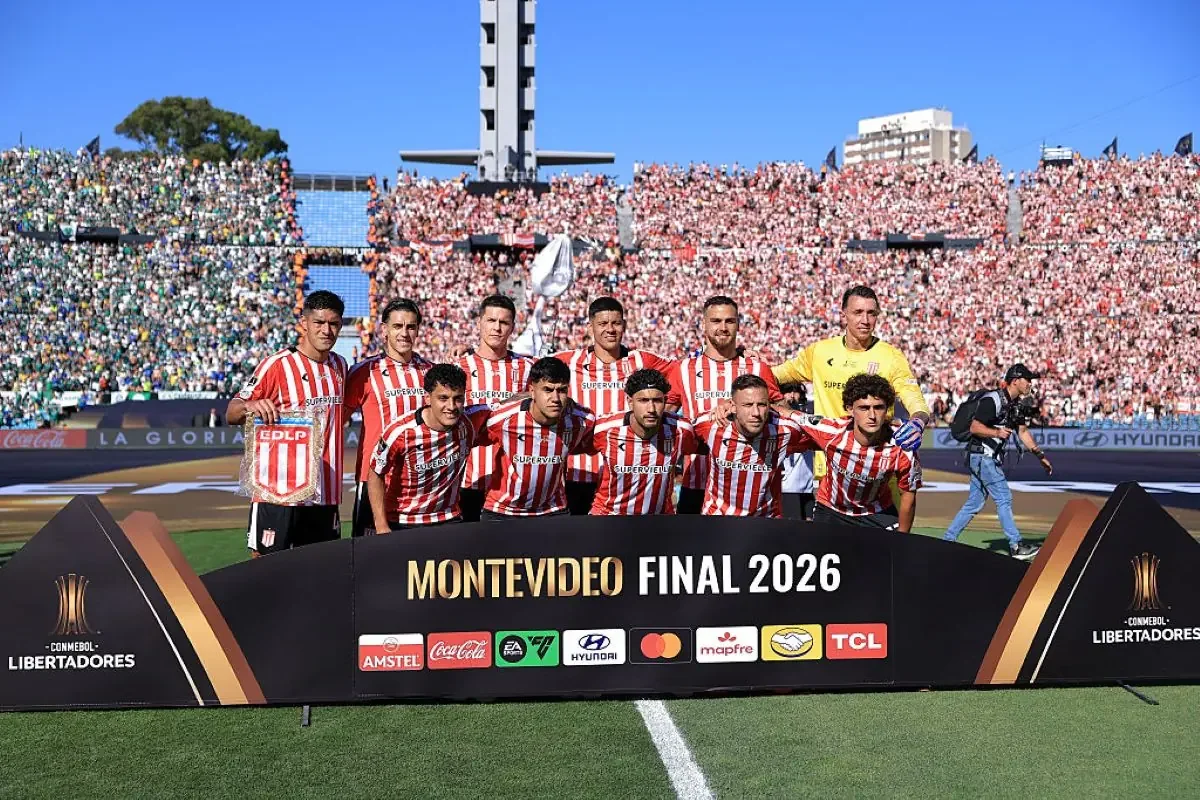
Fernando Muslera, goalkeeper for Estudiantes, experienced an emotional moment before the Libertadores final. The Uruguayan became visibly moved and cried during the playing of Uruguay’s national anthem at Estadio Centenario. Palmeiras and Estudiantes were competing for the continental tournament title.
The moment took place before the match began, while the national anthem was being played. Muslera, a goalkeeper who has represented Uruguay at five World Cups, drew attention during the ceremony. A post published by Noite de Copa on November 28, 2026, also described the final as bringing together “many specific stories.” The video and the reaction to it placed the focus on a player whose career has connected him with Uruguay’s national team and with the club contest taking place that day.
An anthem before a final can give a match a ceremonial beginning, with attention briefly shifting from the teams’ preparations to the people and histories represented on the field. In this instance, Muslera’s visible emotion was the notable moment described in the report. The account does not specify what he was thinking or what caused him to cry, so the moment can be described only as an emotional response during Uruguay’s anthem. It happened at Estadio Centenario, where Palmeiras and Estudiantes were set to decide the title.
Muslera is 40 years old and appeared for Uruguay in five World Cups: 2010, 2014, 2018, 2022 and 2026. Those appearances span five editions of the tournament, and the report identifies him as a goalkeeper with a long history in the national team. At the 2026 World Cup, however, his performances were described as poor, and he was marked by errors in Uruguay’s group-stage matches. Uruguay was eliminated in that stage of the competition.
The account presents that World Cup experience alongside a different role in the Libertadores. For Estudiantes, Muslera was decisive in the semifinal against Flamengo. The teams’ place in the final was determined through a penalty shootout, in which Muslera saved three of Flamengo’s attempts. Those saves were central to the Argentine club’s qualification for the final, according to the report.
A penalty shootout is a way of deciding a tied match when the competition’s rules call for a winner. Each attempt places a penalty taker against the goalkeeper, who must try to stop the ball while responding to the taker’s movement and direction. Saving three attempts in a shootout is therefore a substantial contribution to a team’s chance of advancing. In Estudiantes’ semifinal, Muslera’s saves helped secure the club’s place in the title match.
The contrast between the goalkeeper’s difficult World Cup campaign and his important semifinal performance is part of the context surrounding the final. The report says Muslera had errors during Uruguay’s group-stage games, but it also records his three saves against Flamengo. These are separate episodes in different competitions: one involved Uruguay at the World Cup, while the other involved Estudiantes in the Libertadores. The pre-final anthem moment added another scene to the account of a season that included both disappointment and a consequential club performance.
The final brought together Palmeiras and Estudiantes, two clubs with histories of winning the Libertadores. Palmeiras had three titles before the match and could win the competition for a fourth time. The Brazilian club’s previous titles came in 1999, 2020 and 2021. Estudiantes had won the tournament four times and could become a five-time champion with a victory. Its previous titles came in 1968, 1969, 1970 and 2009.
Those records give the final a clear competitive context without determining its outcome. Palmeiras entered with the possibility of adding a fourth title to its total, while Estudiantes had the chance to reach five. The figures describe what each club had already achieved and what was at stake in the match. They do not, by themselves, indicate which side would win.
The name Libertadores refers to the continental club competition that Palmeiras and Estudiantes were contesting. A final brings the season’s title decision to a single match or final series, depending on the tournament format. The report focuses on this final as the occasion for Muslera’s emotional moment and as the match in which the two clubs sought another championship. It does not provide a final score or say which team lifted the trophy.
For Muslera, the setting also joined national and club football in one brief scene. He was wearing the role of an Estudiantes goalkeeper as the clubs prepared to play, while the anthem being heard was Uruguay’s national anthem. His five World Cup appearances form the national-team background given in the report; his semifinal saves for Estudiantes provide the immediate club context. The image of him crying during the anthem became a focus before the teams competed for the title.
The published account does not offer additional explanation for his reaction, and it does not attribute a particular cause to his tears. It reports that he became emotional during the anthem at Estadio Centenario, then sets that moment against his World Cup history, Uruguay’s group-stage elimination in 2026, and Estudiantes’ route to the final. It also notes the two finalists’ title totals and the chance each had to add to them.
The central details are therefore the moment before kickoff and the match surrounding it: Muslera cried during Uruguay’s anthem, Estudiantes faced Palmeiras, and both teams entered with a chance to add another Libertadores title. Muslera’s career includes five World Cups, while his three penalty saves against Flamengo helped Estudiantes reach the final. Palmeiras sought a fourth championship; Estudiantes sought a fifth. The report records those circumstances without stating the final’s result.