

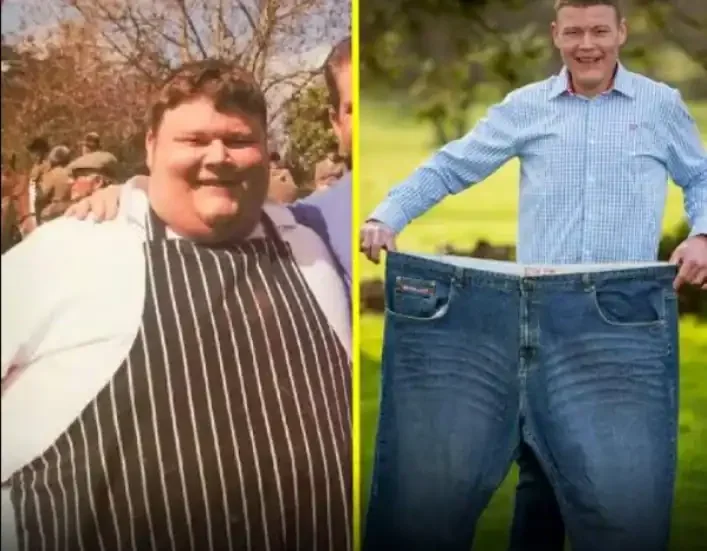



Jamie Brooks’ experience illustrates the challenges involved in living with obesity and making major changes to health habits. Brooks once weighed 229 kilograms, or about 505 pounds. He has said that his appearance made him afraid to look at his reflection in the mirror. His weight also worried people close to him, including his friend Neil Williamson, who decided to intervene.
Williamson began sending Brooks daily messages about the health risks associated with his weight. His approach was direct: he told Brooks that he could die before turning 40 if he did not change his habits. The warnings made an impression on Brooks and helped prompt him to begin a weight-loss effort, according to the account of his experience.
Brooks then joined the Ideal Weight program. At the beginning, the plan involved eating just 640 calories per day. Over the course of a year, he lost 133 kilograms, or about 293 pounds. His starting weight was reported as 229 kilograms, so the two figures indicate a substantial change in weight. The transformation also meant changes to his appearance and daily routine.
The amount of weight Brooks lost in a year is striking, but the method described in the account warrants caution. A daily intake of 640 calories is extremely restrictive and well below what most adults ordinarily need. Such a plan should not be treated as a general recommendation or copied without medical guidance. A person’s nutritional needs depend on individual circumstances, and a diet that is appropriate for one person may not be suitable for another.
Calorie intake is one part of a person’s overall nutrition. Food also supplies protein, fats, carbohydrates, vitamins, minerals and other nutrients that support normal bodily functions. When food intake is severely limited, it can become difficult to obtain enough of these nutrients. The article’s account specifically notes concerns about nutritional deficiencies, loss of muscle mass and other possible complications associated with severe restrictions.
Weight loss can also involve changes in more than body weight alone. The account describes Brooks’ experience as a significant change in his relationship with his body, as well as a transformation in his appearance and routine. However, it does not provide details about his medical care, specific dietary composition, exercise routine or health measurements. Those details matter when assessing an individual weight-loss plan, and the reported result by itself does not establish that the same approach would be safe or effective for someone else.
The figures also show why the outcome should be understood as a personal account rather than a template. Losing 133 kilograms from an initial weight of 229 kilograms represents a very large change over a year. A person considering weight loss may have a different starting point, medical history, nutritional needs and response to treatment. The pace and methods involved therefore cannot be assumed to transfer from one person to another.
The story also draws attention to the role that people close to someone can play when they are worried about that person’s health. Williamson’s repeated messages were intended to alert Brooks to the risks he believed his friend was facing. In this case, the account says the messages helped influence Brooks’ decision to start a program. That does not mean every person will respond to the same kind of conversation, or that a single approach will be right for every relationship. It does show that concern from a friend was part of the events leading to Brooks’ decision.
Discussions about weight and health can be sensitive. The account describes Brooks’ fear of looking at himself in a mirror, a detail that points to the personal distress he experienced alongside concerns about physical health. His experience should not be reduced solely to a number on a scale. Weight measurements can describe one aspect of a person’s health, but they do not by themselves explain a person’s circumstances, needs or relationship with their body.
The reported plan’s initial calorie limit is an important distinction between Brooks’ individual experience and general guidance. Very restrictive diets may require careful professional oversight, particularly when the intake is far below ordinary needs. Medical professionals can assess a person’s health and help determine whether a specific intervention is appropriate. They can also monitor for potential complications and address nutritional needs during a major change in eating habits. The account does not specify what supervision Brooks received, so it does not provide enough information to assess that part of his program.
The broader lesson in the report is twofold: support from someone close may help a person consider a change, while a dramatic result does not make an extreme diet a safe recommendation for others. Specialists cited in the account caution that very restrictive diets and large weight losses call for professional supervision to help prevent deficiencies and other complications. The warning is especially relevant when a plan begins at a level as low as 640 calories a day.
Brooks’ year-long transformation drew attention because of the scale of the reported weight loss. His story describes the concern that prompted him to act, the program he began and the change he experienced. It also underscores why people should seek individualized professional advice before adopting severe dietary restrictions. Obesity and weight management are complex, and a personal account cannot substitute for an assessment of an individual’s health and nutritional requirements.