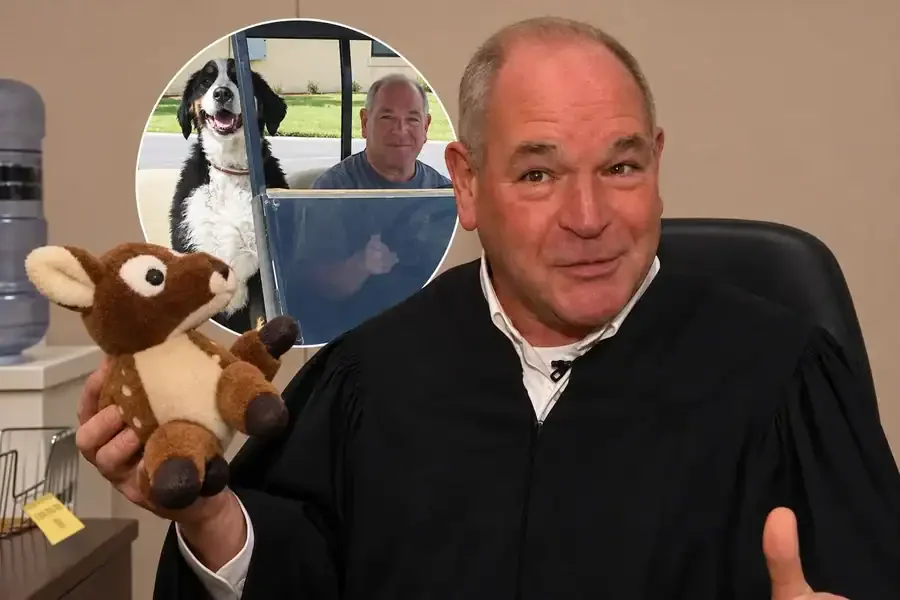


Michael Cicconetti, a judge who served on the Painesville Municipal Court in Ohio, became known for offering alternative sentences to people convicted of offenses including animal abuse, abandonment and theft. In some cases, those responsible were required to face situations that echoed the conditions or consequences experienced by their victims. Among the measures described were requiring a woman to spend time alone in a cold wooded area and directing another woman to work for eight hours at a landfill.
The sentences drew attention because they were designed to connect the consequence with the conduct involved. Rather than imposing only a conventional period of incarceration, Cicconetti sometimes offered an alternative that required a person to confront, in a limited and supervised way, an aspect of the harm or inconvenience associated with the offense. The cases included here involved different circumstances, and the measures were not identical: some related to animal neglect, while others concerned conduct such as an assault or failure to pay for a taxi ride.
One of the best-known episodes took place in November 2005. Michelle Murray was convicted of abandoning 35 kittens, nine of which died. As an alternative to serving 90 days in jail, she was offered the option of spending a night alone in a wooded area during cold weather, with snow. Murray accepted the option. The experience ended after four hours, when Cicconetti ordered that she be removed from the location.
The account of the case presents the arrangement as an alternative to incarceration, not as a sentence requiring Murray to remain in the woods for the full night regardless of circumstances. She was taken out of the area before the planned period was complete. The details illustrate the unusual nature of the judge’s approach, while also showing that the alternative could be stopped rather than carried through exactly as first described.
A decade later, Cicconetti imposed another alternative sentence involving animal neglect. In 2015, Alyssa Morrow admitted that she had left her seven-year-old dog, Moose, a pit bull mix, for a week in a residence with inadequate hygiene conditions. Instead of serving 90 days in jail, Morrow chose to spend eight hours collecting trash at a landfill in Lake County, Ohio.
Cicconetti directed her to work in the part of the site with the strongest odor, connecting the assignment to the conditions in which the dog had been kept. Morrow told ABC News’ “Nightline” that she had not expected to be at a landfill but preferred the work to going to jail. “I definitely didn’t think I’d be here [at a landfill], but I’d rather be here than in jail. I can’t complain,” she said. After the case, Moose was made available for adoption.
The landfill assignment was different from the earlier case involving Murray. Murray’s alternative involved spending time outdoors in cold weather, while Morrow’s required a set number of hours collecting trash. Both were presented as alternatives to jail time, but the surrounding facts and the tasks assigned were specific to each case. The article’s account does not give additional details about the full terms of either sentence.
Cicconetti also used alternative penalties in cases that did not involve animals. In 2015, Diamond Gaston was accused of attacking another person with pepper spray. She accepted a measure in which the person she had attacked sprayed her. The product was not ordinary pepper spray: it was a police training solution made of water and salt. Cicconetti had tested the solution on his own eyes before the hearing, according to the account.
Another case involved Victoria Bascom, who was 18. After failing to pay for a taxi ride covering approximately 30 miles—the same distance she had traveled in the cab—Bascom was given a choice between walking that distance or serving 30 days in jail. The account describes the walking option as an alternative sentence. It does not provide further information about how the walk was arranged or what Bascom ultimately chose.
A separate punishment involved a man ordered to wear a chicken costume. The measure was part of Cicconetti’s broader practice of imposing alternatives that he believed had a direct relationship to the offense. The available account does not specify the underlying conduct in that case, so the costume sentence can be described only as one example of the unconventional penalties associated with his courtroom.
In comments to ABC News, Cicconetti explained that a judge could apply the law by selecting from the penalties available for an offense, but could also consider each case more personally while still applying the same law. He said that his aim was to make the consequences relate to the conduct rather than treat every case as interchangeable. His explanation described the reasoning he said guided the decisions; it does not mean that every defendant received an alternative sentence or that the same kind of measure was used in every case.
The difference between a conventional sentence and an alternative one is important to understanding these examples. A conventional sentence may include a period of incarceration, while the alternatives described here involved tasks or experiences outside jail. The cases show the particular options Cicconetti offered in individual proceedings. They do not establish a general sentencing rule for Ohio or indicate that other judges use the same measures.
Cicconetti also said that he wanted interventions in lower-level offenses to help prevent people from committing further crimes. He cited a recidivism rate of about 10% among people subject to his decisions. That figure was presented by the judge himself. The account does not provide a separate study, a comparison group or other information that would allow the percentage to be independently assessed or compared with other sentencing approaches.
The judge reportedly handled between 30 and 40 cases a day at the Painesville Municipal Court. His alternative sentences attracted attention beyond the court because of their unusual and direct connections to the offenses. Taken together, the cases show the variety of measures he used: time in a cold wooded area, work at a landfill, a training spray solution, a long walk instead of jail and a chicken costume. Cicconetti’s stated approach was to make the consequences personally relevant while staying within the law.