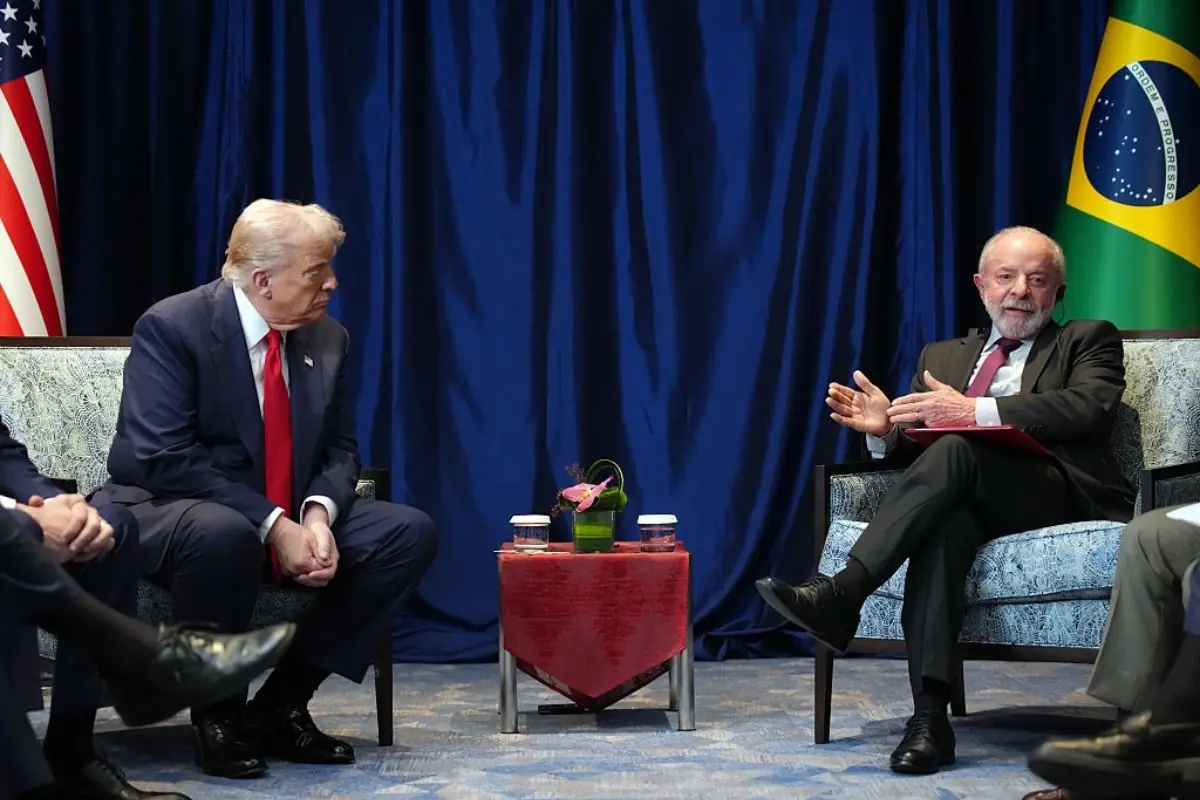
Brazilian President Luiz Inácio Lula da Silva’s government viewed Democratic gains in the 2026 U.S. midterm elections favorably as it awaited signs of how the results might affect relations between the two countries. (Foto: Instagram)
The government of Brazilian President Luiz Inácio Lula da Silva viewed the Democratic Party’s victory in the Nov. 3, 2026, U.S. midterm elections favorably. The administration is waiting to see how the new political landscape develops before assessing the future of relations between Brazil and the United States, which have been strained by political and trade disputes.
Democrats won control of both the House of Representatives and the Senate, a setback for President Donald Trump. They also prevailed in gubernatorial races in states previously led by Republicans, including Georgia, Iowa, Texas, Ohio and Nevada. Lula government allies celebrated what they called a “blue wave” on social media, describing Trump’s defeat as overwhelming and drawing comparisons to Lula’s presidential election victory in Brazil.
Brazil had been waiting for the election results before deciding how to proceed in its dealings with the United States. Officials hope that negotiations on shared priorities can resume now that voting is over. One unresolved issue is the steep tariffs the U.S. government imposed on Brazilian products. Negotiators resumed talks in August after a call between Lula and Trump, but discussions were put on hold during the election period.
The new balance of power in Congress gives Democrats greater ability to block administration proposals and increase scrutiny of the Trump administration. It could also make it harder for the president to win approval for his legislative priorities over the next two years. Brazilian officials see the shift as potentially helpful to Lula’s international agenda, particularly on environmental issues and regulation of major technology companies. Lula’s allies have said digital platforms, especially Meta, played an uneven role during Brazil’s election campaign.
The partial results showed Democrats with more than 50 Senate seats and at least 218 seats in the House, the thresholds needed for majorities in both chambers. The elections included 35 Senate seats, 36 governorships and all 435 House seats. As of 6 p.m. on Nov. 4, Democrats had also won 28 governorships, compared with 20 for Republicans. The election took place as Trump’s administration faced what the report described as its greatest period of political strain. Trump and his allies blamed the results on the war with Iran.
Brazil-U.S. relations have also been affected by a dispute over visa restrictions involving Brazilian Ambassador Maria Luiza Viotti and by the departure of Sen. Flávio Bolsonaro for the United States. Bolsonaro, who had lost in Brazil’s elections, reportedly received White House support in leaving the country. He traveled to Miami, Florida, in defiance of a court order, and the U.S. government granted him a visa to remain in the country.
The United States was among the few countries that did not officially recognize Lula’s victory. Trump also suggested, without presenting evidence, that Brazil’s election had been fraudulent. The presidential palace has sought to avoid escalating tensions by responding cautiously to the Republican president’s remarks. The government also wants to distance itself from potential political fallout and prevent the episode from being used for political purposes.